Sterling Pacific 40L: A Superior Alternative To Rimowa’s Aluminum Cabin
Sterling Pacific 40L: A Superior Alternative To Rimowa’s Aluminum Cabin
Featured On
Disclosure:This post may contain affiliate links, which means I might earn a small commission, at no cost to you, if you make a purchase. I curate and only recommend products and services I would use or book myself.
If you are looking for a classic silver aluminum suitcase, and you know what to expect from owning an aluminum suitcase, and maybe you’ve thought about buying the Rimowa Classic Cabin, like I had on and off for years, let me introduce you to a little gem not so well known outside the aviation circle.
I don’t say this lightly.
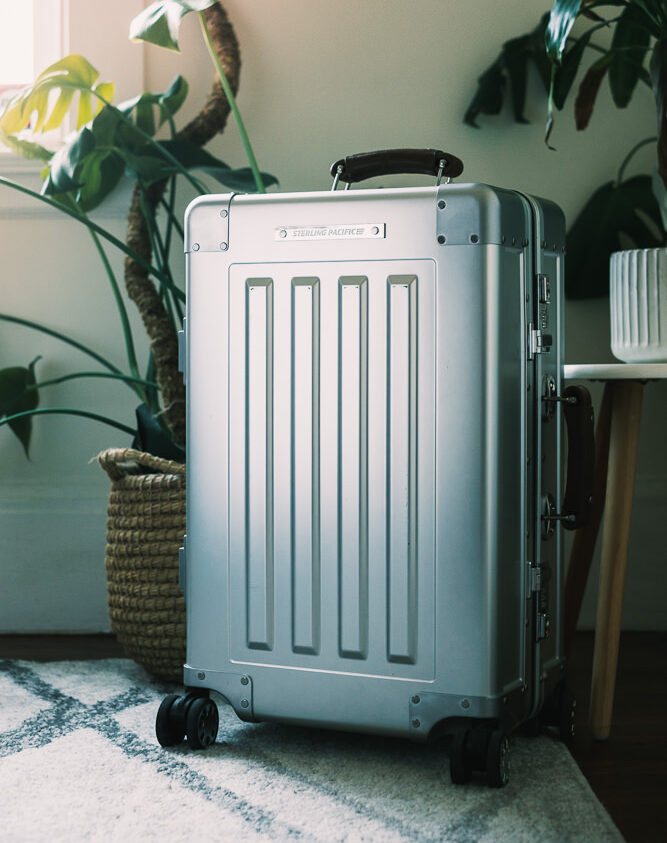
In nearly every aspect from design and build to usability and durability, I prefer Sterling Pacific’s 40L Cabin over Rimowa’s 36L Classic Cabin – except for the weight. It’s one of my new favorite finds.
Despite Rimowa being the longstanding established brand and status quo choice when it comes to aluminum suitcases, Sterling Pacific simply makes a better product.
Over the course of nearly two decades and traveling across 80+ countries, my back and I found started reaching for a suitcase instead of a backpack more often than not. I eventually decided to invest in a buy-once luggage upgrade and instantly thought about picking up the Rimowa Classic Cabin I’ve longed for (like the La Marzocco espresso machine), but didn’t want to shell out over $1500 to get a carry-on.
Instead, I went down an aluminum rabbit hole and ending up spending even more for the Sterling Pacific. And I have no regrets.
This is one of those instances where the product deserves to be seen and touched in person to truly appreciate and justify the $2150 price tag.If you’re the type to regularly shop luxury brands, you might not even blink at the price. For everyone else, here’s my experience of owning the new 40L aluminum carry case for a few months.
Road Trip With The SP40
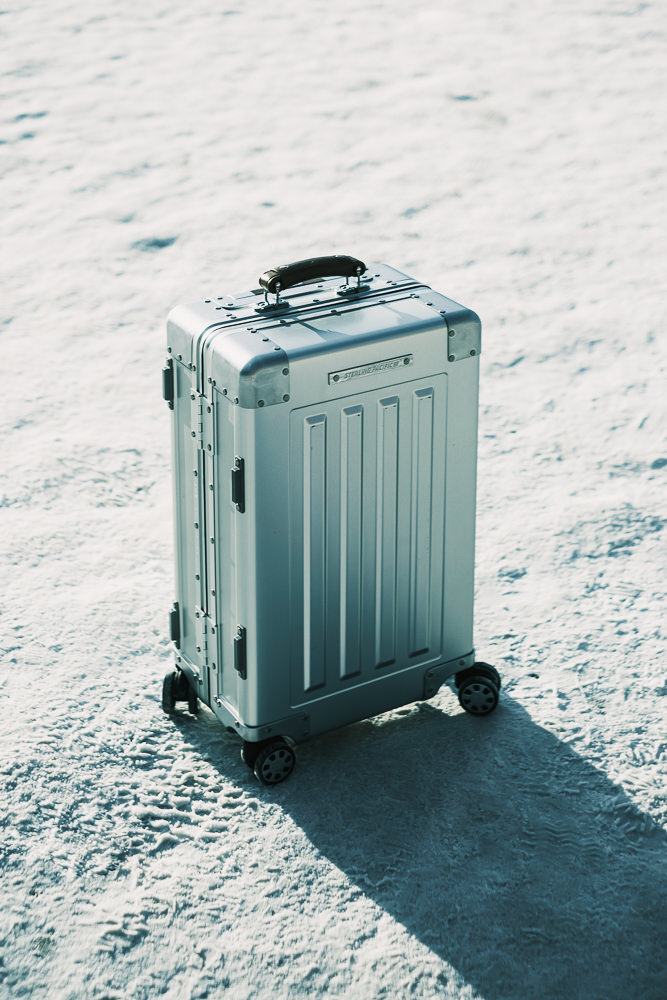
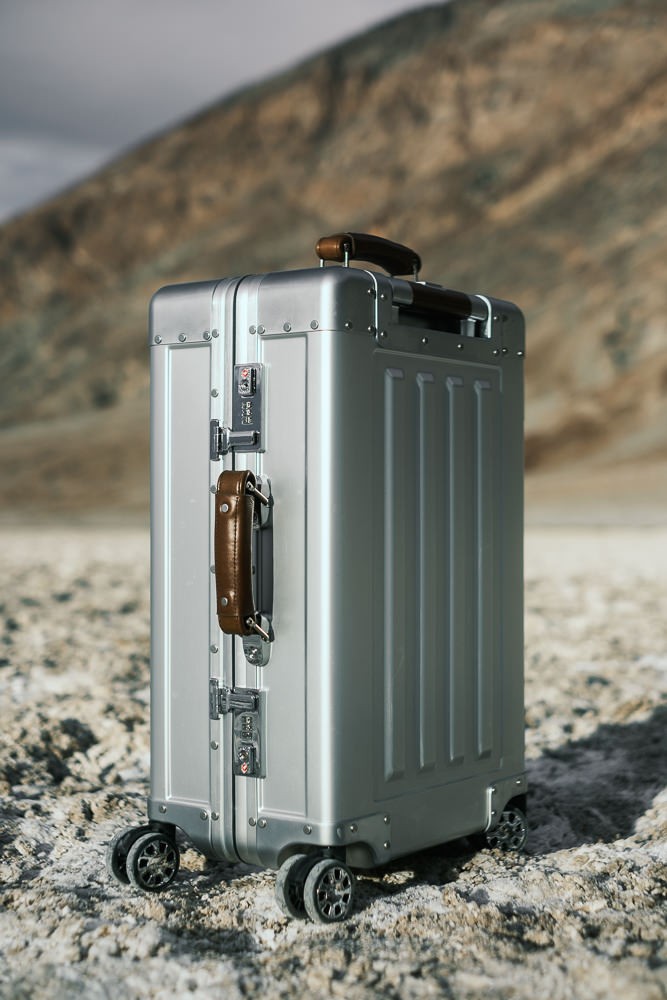
To properly break in my new Sterling Pacific 40L Cabin (“SP40”), I took it on a road trip to Las Vegas and Death Valley with some friends. This was only the 2nd time I used the SP40, and it was still looking pretty fresh after a Thanksgiving ferry ride to Catalina Island.
I was able to easily pack a weekend’s worth of hiking clothes, something nice to wear in Vegas with an extra pair of shoes, my toiletries and a tech bag for my camera batteries and chargers.
With just my Prvke 21Land the SP40, I breezed through security at LAX to board my Delta flight to Sin City.
At the car rental pick-up counter in Las Vegas, I got my first compliment.
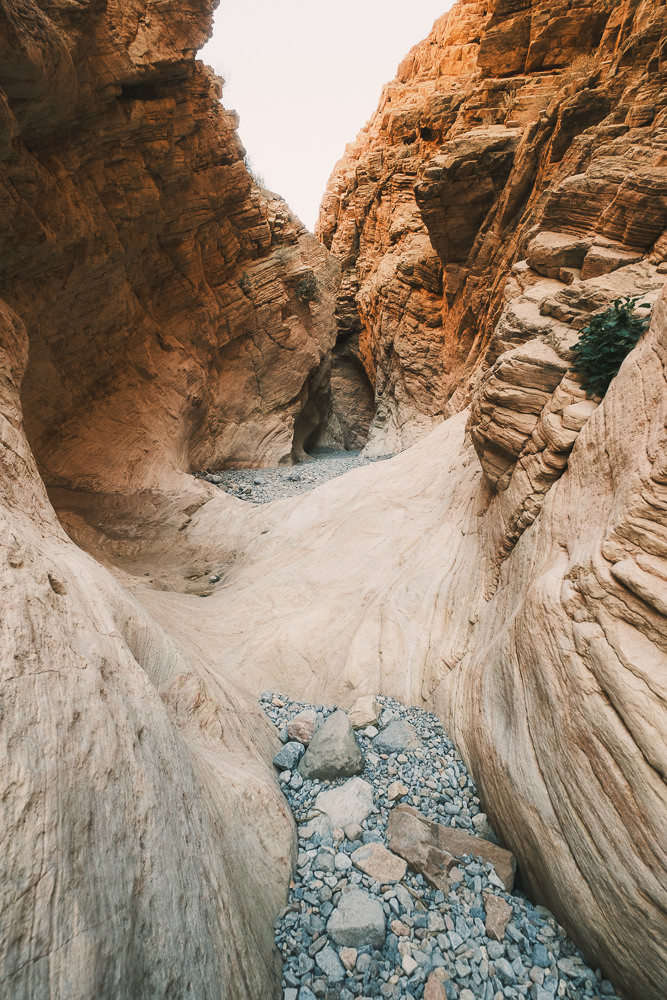
We loaded up the car with a couple of bags on top of the SP40 and took off for Anniversary Narrows and Owl Canyon. Highly recommended BTW. I tossed everything on top to test the sturdiness and durability of the aluminum.
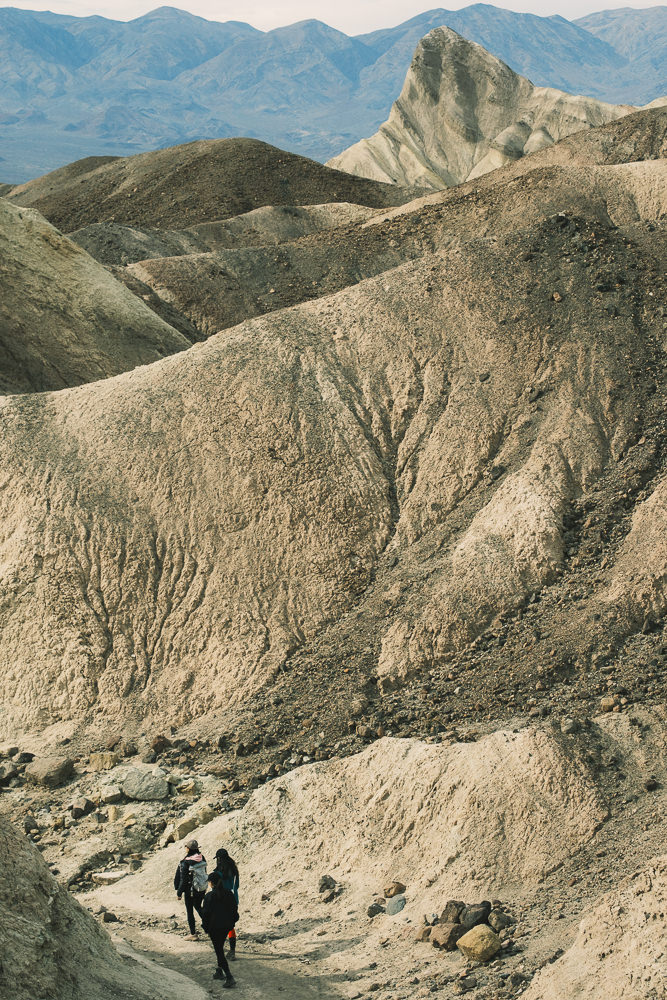
Death Valley National Park far exceeded any expectations, mainly because I couldn’t believe the different type of terrain and natural formations that existed all in this one national park. It’s now a new favorite and if you haven’t been, you should plan a trip in the winter months when the temperatures are perfect.
Dante’s View, Zabriskie Point, Artist’s Palette, and Mesquite Dunes are my recommendations for any Death Valley itinerary, especially driving the road out of Artist’s Palette to Mesquite Dune at sunset. I only regret that we didn’t plan for an extra day here so we could spend longer at each spot.
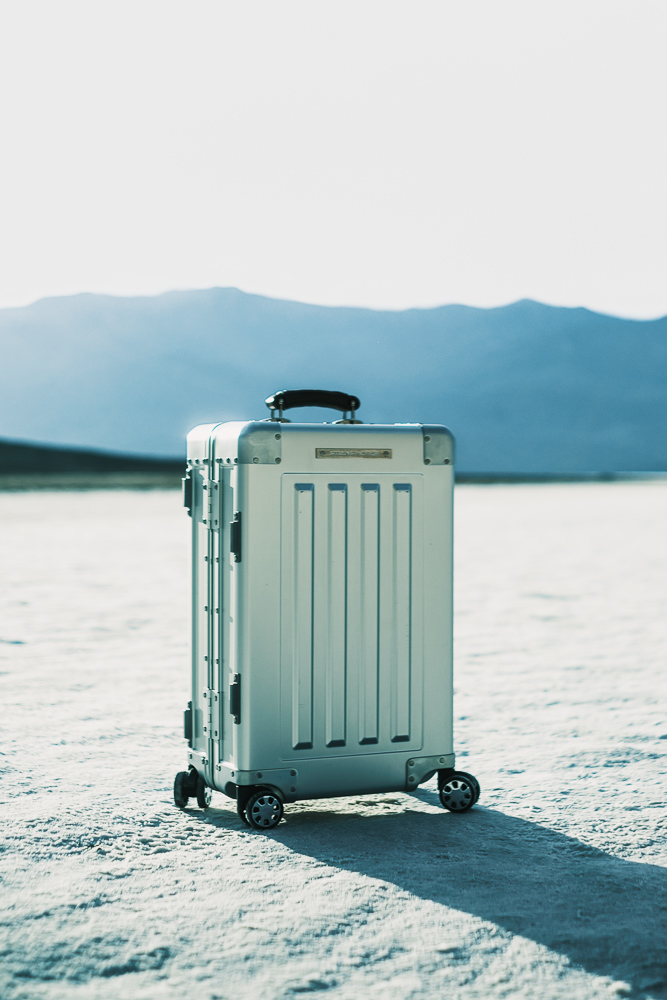
I expected the deserts, dunes, and dusty rock formations, but the expansive salt flat at Badwater Basin was something else. At 282 ft below sea level, it’s the lowest point in the US.
But I digress.
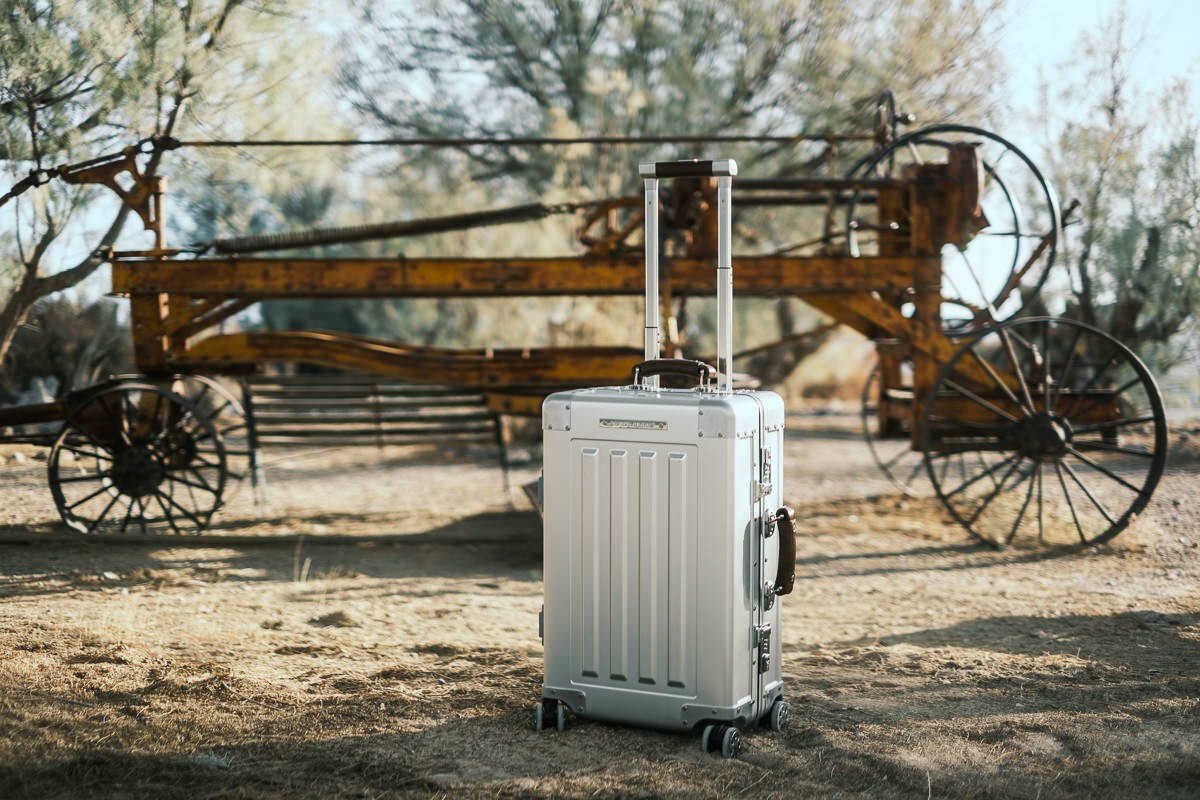
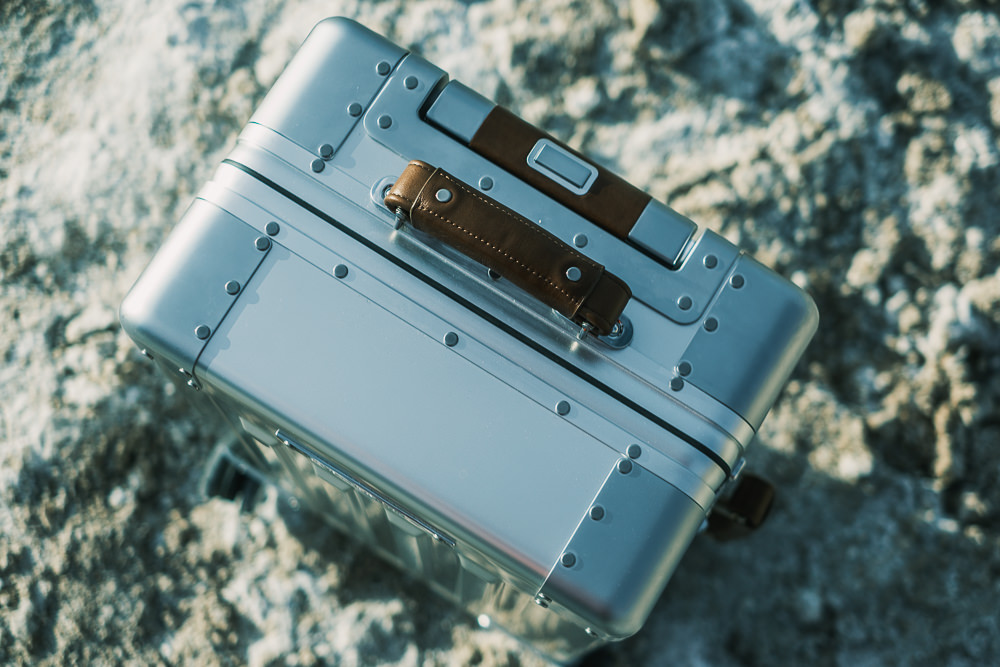
Just before leaving, I took the suitcase out to get a few shots in its relatively pristine condition.
Down the line, there will be plenty of scratches, maybe a few small dings and dents, but I will remember this trip as its first real adventure. I think that’s part of what makes owning an aluminum suitcase special. It’s one of those things where you want to wear it in. Some people will decorate them with stickers from around the world, but I think the natural blemishes and patina will be enough for me.
Revisiting The Rimowa Aluminum Line
Back in Las Vegas, I spent an hour at the Rimowa store, looking closely at the Rimowa Classic Cabin (“RCC”) to get a bit of confirmation bias that I made the right decision.
In the past, I had come close a few times to buying Rimowa’s Original Cabin in black and I bought an Original Check-In L for my sister before the price jumped. The Classic Cabin was what I was originally drawn to, but I disliked how cheap the gray plastic housing looked around the wheels on their silver model.
Rimowa’s unmistakable vertical grooves were still as beautiful as ever, but somehow, the magical allure had faded a bit.
It was the interior that stood out most between the two cases.
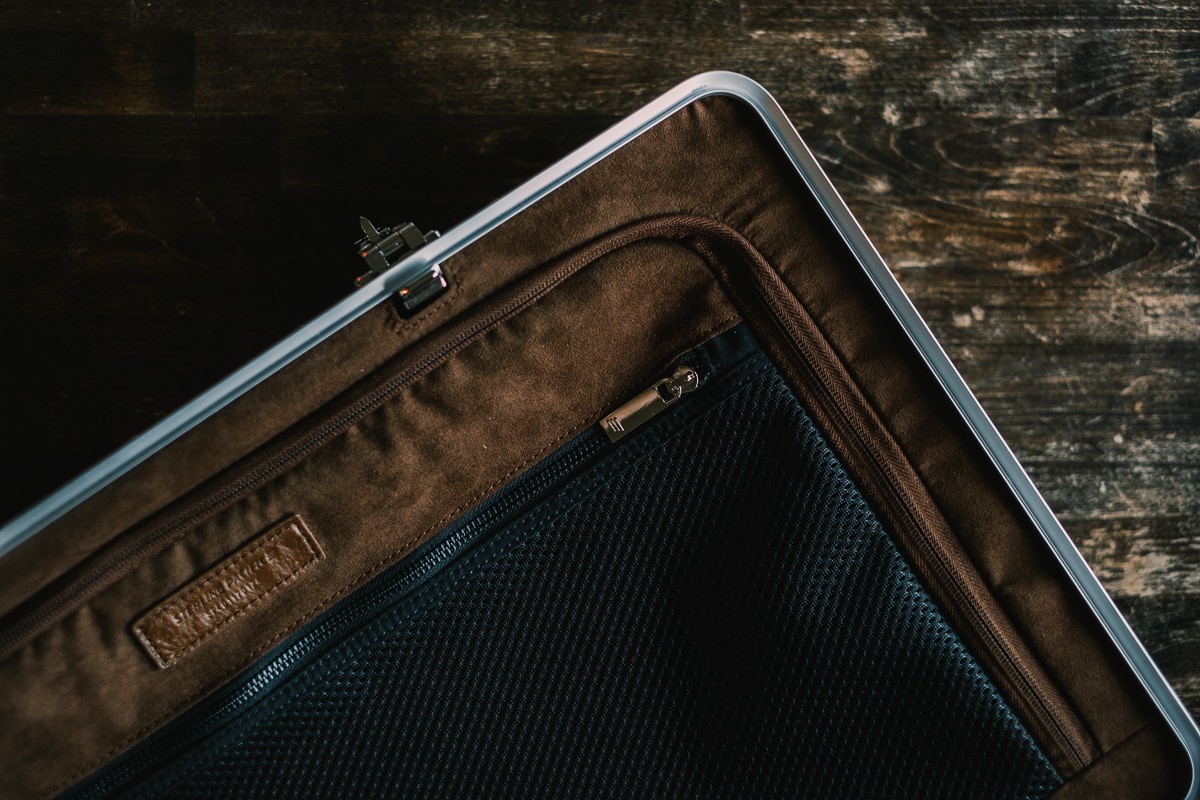
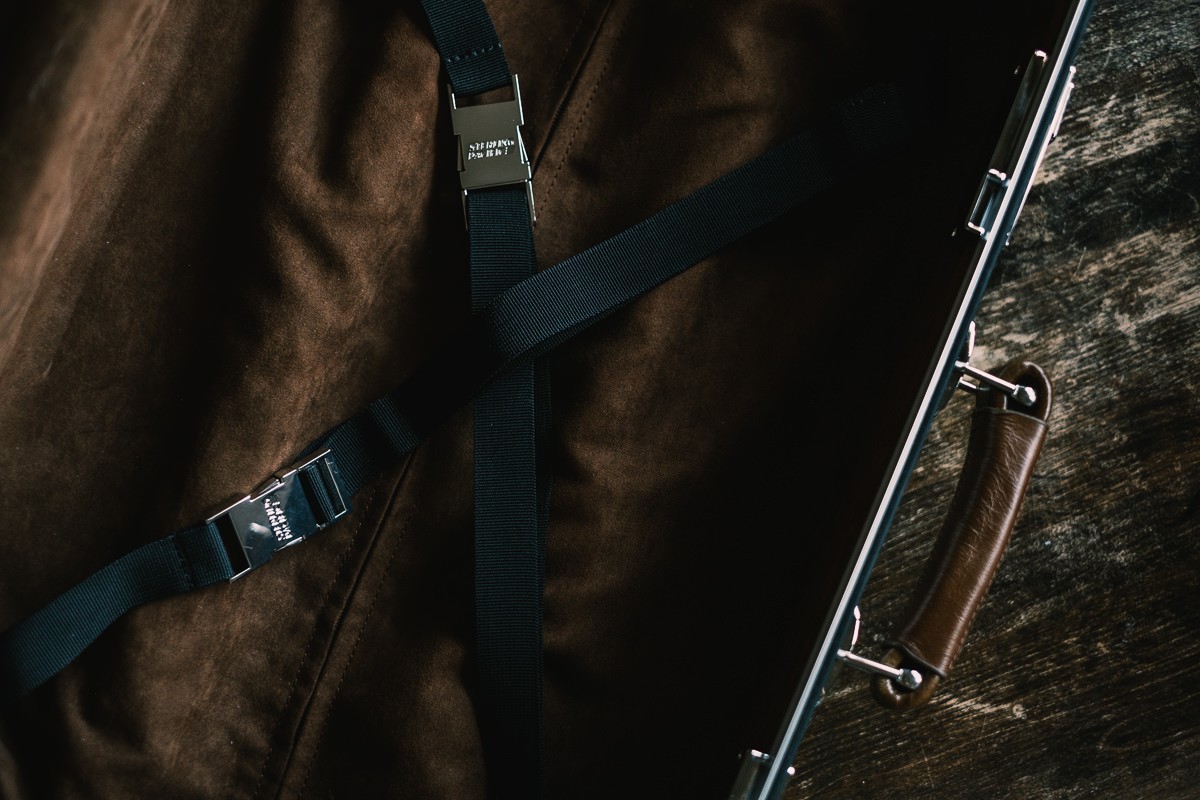
The dual dark grey dual mesh dividers that Rimowa uses looked pedestrian compared to the luxurious soft brown faux suede in the SP40.
And while I like the flexibility of being able to remove the flex dividers in the Rimowa, I preferred that the SP40 had a zippered compartment on one side, which makes packing with the clamshell design easier.
The RCC felt lighter, coming in around 2.5 lbs less than the SP40, but the latter felt more solid.
Overall, I still liked the Rimowa, but the gray plastic parts around the wheels now stuck out a bit more.
Sterling Pacific 40L VS Rimowa Classic Cabin 36L
Pricing
In the US, the Rimowa Classic Cabin costs $1525 + tax. The Sterling Pacific 40L costs $2150 + tax. A difference of $625 + tax. Both offer free shipping in the US.
Sizing and Weight
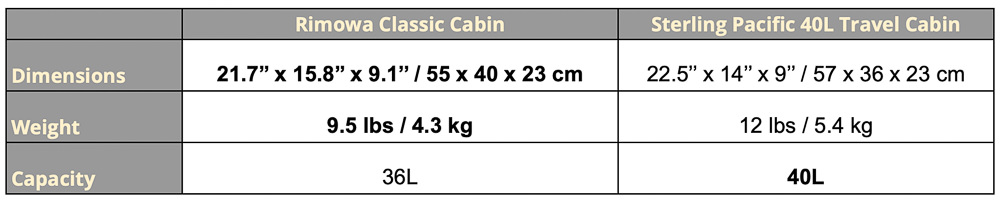
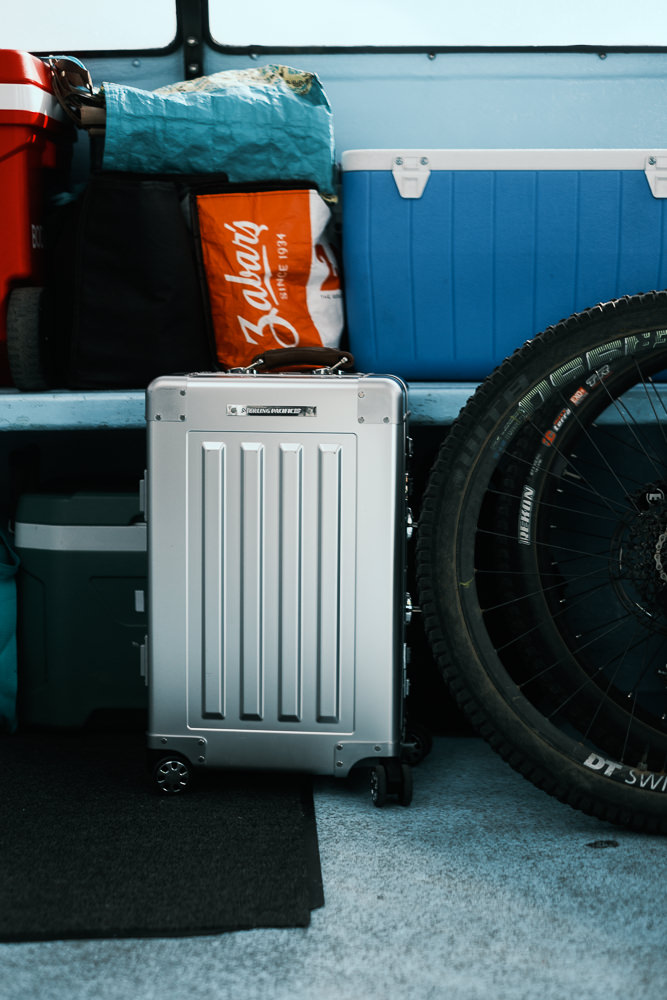
Side by side, both suitcases look similar in size, but the RCC is almost 2” wider and just about an 1” shorter.
The international carry-on standard is 22’’ x 14’’ x 9.1’’ or 56 cm x 36 cm x 23 cm.
Rimowa sizes slightly wider while Sterling Pacific is a hair taller. Practically speaking, both will be allowed on most major airlines.
Rimowa is a bit lighter than Sterling Pacific and both are in the range I’d expect for aluminum suitcases.
Reality check: If you’re indiscriminately choosing the cheapest airlines, I would consider a lighter polycarbonate material over aluminum.
If you’re flying business class or on flagship airlines, the weight shouldn’t be an issue. For years, I traveled with the AWAY Bigger Carry-On, which at 22.7’’ x 15.4’’ x 9.6’’ is bigger on all sides than both of these suitcases and never had any problems.
Sterling Pacific has the 40L carry on and an older 35L version that has two fixed large wheels instead of four 360° wheels. Rimowa comes in at 36L and also has a slightly smaller version that’s about 1.2” or 3 cm slimmer with a 33L capacity. The extra capacity is nice.
Handles
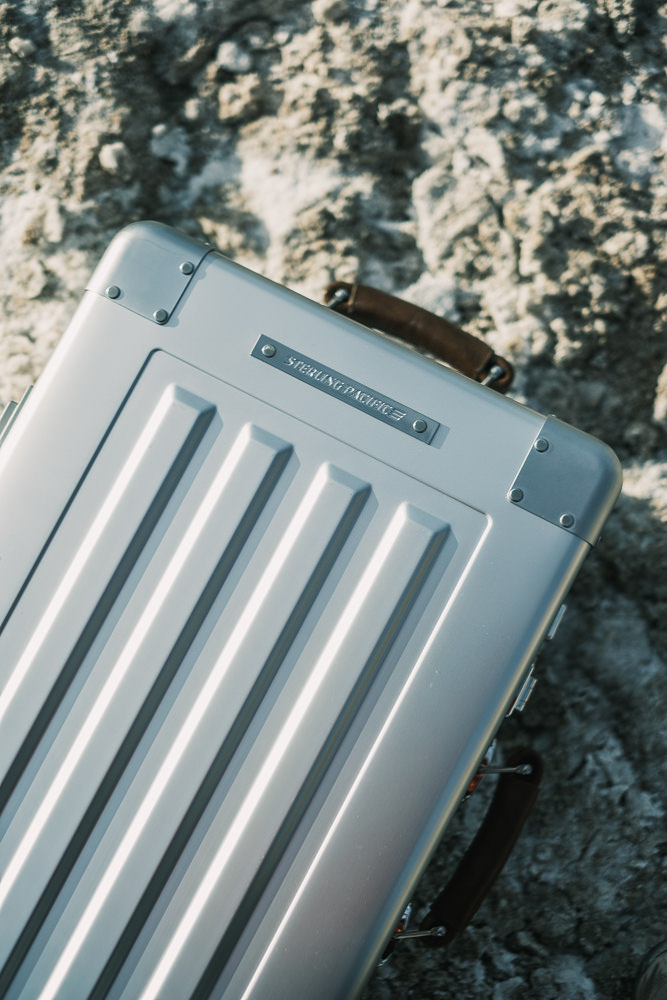
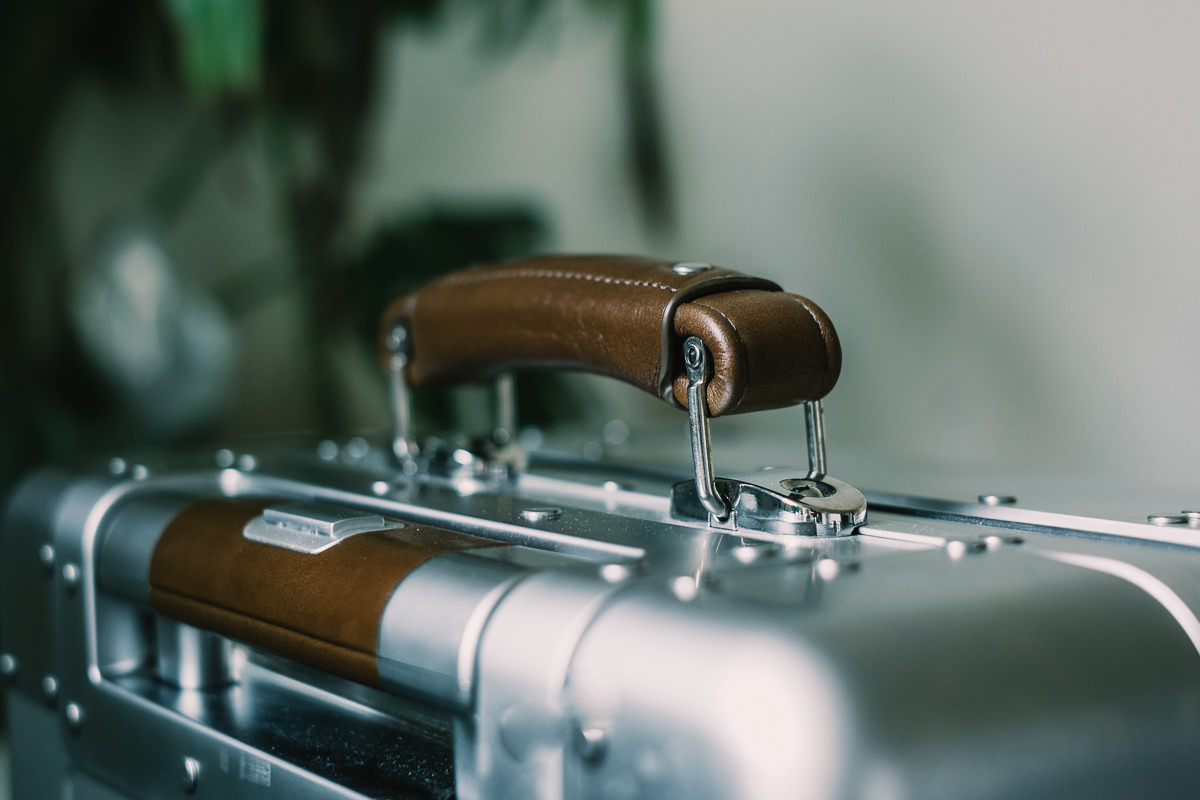
The full-grain brown leather handles on the SP40 really stand out for me.
It’s beefier and grainier than the RCC, which makes the latter look cheaper in comparison. I also prefer the brown tone to the default black on the RCC.
There are 10 other colors to choose from if you customize your suitcase with Rimowa, but the closest, Cognac still didn’t look as good.
The important part is that it’s soft to the touch and comfortable to grip. I can’t wait for it to weather over time for that break-in look. Sterling Pacific comes up an amenity kit that includes leather conditioning wax.
When the SP40 just arrived, I must have pulled the telescoping handle out a dozen times.
There is such a satisfying feel to the telescoping handle that was clearly different from all the previous handles I’ve used.
My friends made the same comment about the handle without any prompting. The one thing that Rimowa does better is that it can lock at any height, but practically, it wasn’t even something I had thought about or noticed until the Rimowa rep pointed it out.
Interiors
The brown faux suede looks and feels so elegant and a premium upgrade compared to the gray mesh zipped pocket dividers and polyester lining in the RCC.
It’s very similar to Alcantara, a synthetic suede-like microfiber that is soft to the touch, but more durable and easy to maintain than real suede.
I like the zipped compartments to separate dirty clothes and keep loose items from falling out when I open the case. On the SP40, the top half is zipped with an outer zipped mesh pocket. The bottom half is open and can be secured with metal bucket straps.
Wheels
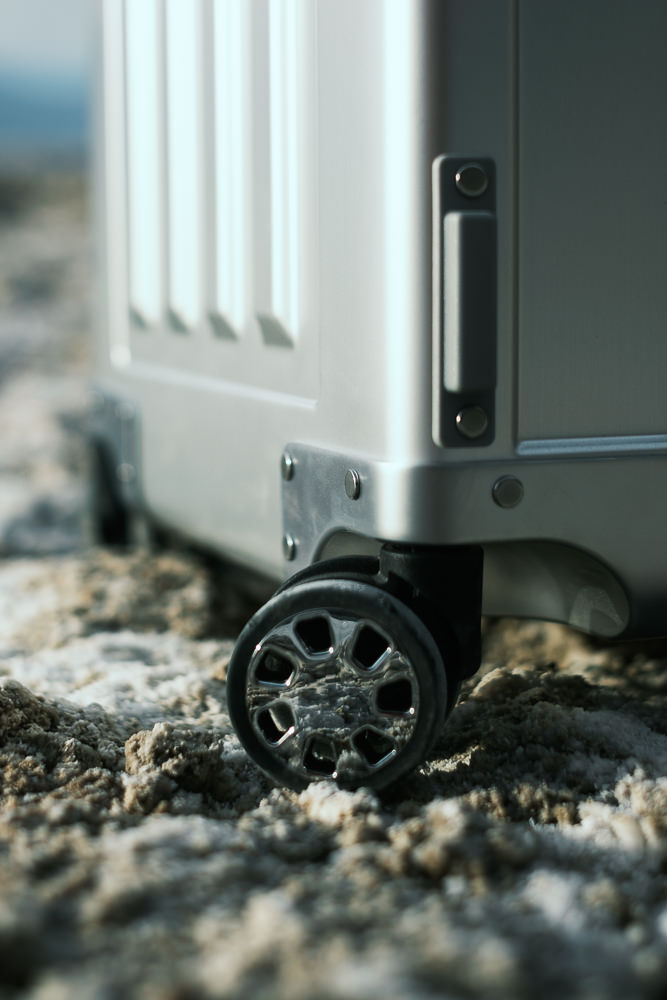
Both models sport have 360° wheels that roll smoothly and track well with very little vibration back to the case and handle. The wheels handled pretty well on all the rough terrain, including the salt flats and some rocky dirt roads.
Design wise, I prefer the all black wheels on the RCC with the minimalist logo. The SP40 has a shiny metal finish that fits with the look, but it did look a little cheap compared to the other premium parts used in the suitcase. I would have preferred a matte or brushed metal finish.
What I really appreciated about the SP40 wheels was that you can unscrew it with a standard 4mm hex wrench.
I think this makes for easy self-repair with the free replacement wheels should anything break.
Build
There’s no comparison here. The SP40 is a superior build in nearly every aspect. The technical specs didn’t mean much to me, but a friend with a better engineering background explained through the jargon that the aluminum is of a premium quality, normally used to types of aluminum to craft industrial parts where strength-to-weight ratio is crucial.
What’s notable is that the wheel housing and the telescoping housing are two areas where the SP40 uses thick solid pieces of aluminum metal while the RCC uses plastic parts.
The only plastic I found are the wheels and the four guards on the bottom side to protect the case when you lay it on its side to open.
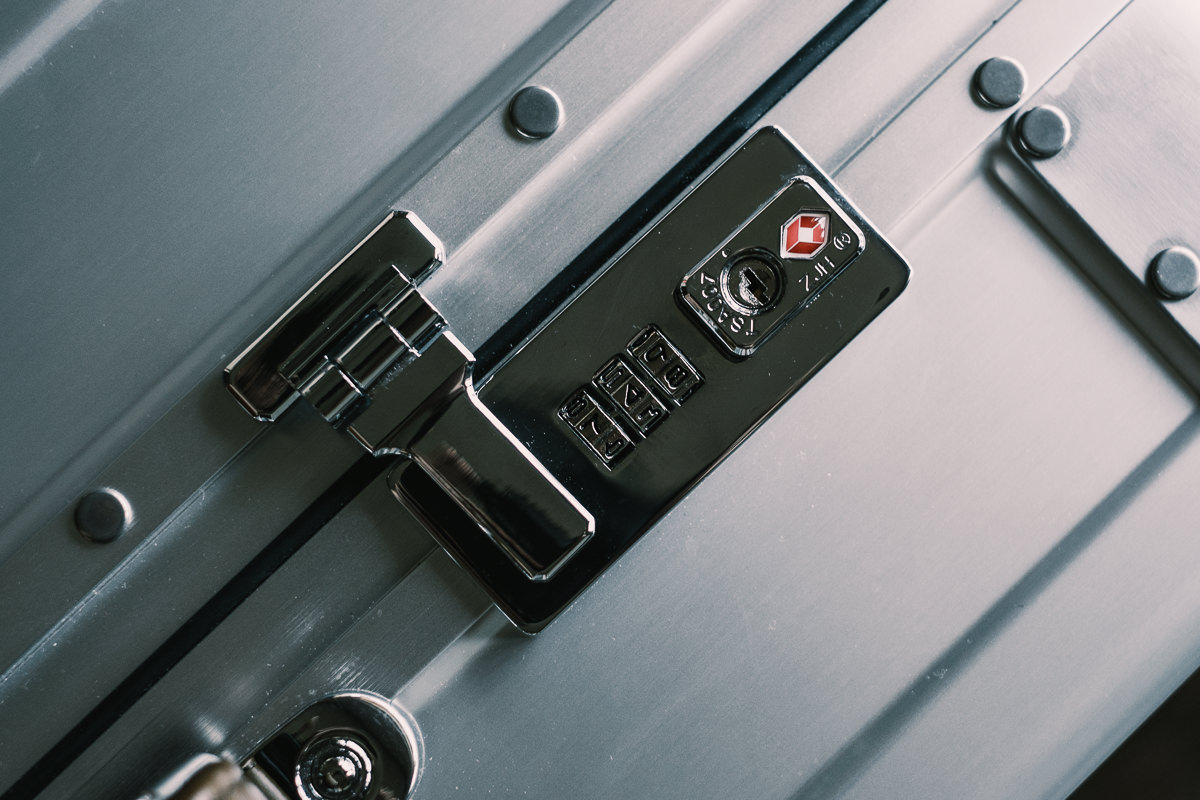
There are no zippers on either suitcases and both close with dual TSA-approved combination snap locks like you’d find on a small briefcase. It’s very satisfying to open. An o-ring runs the entire edge to create a watertight seal.
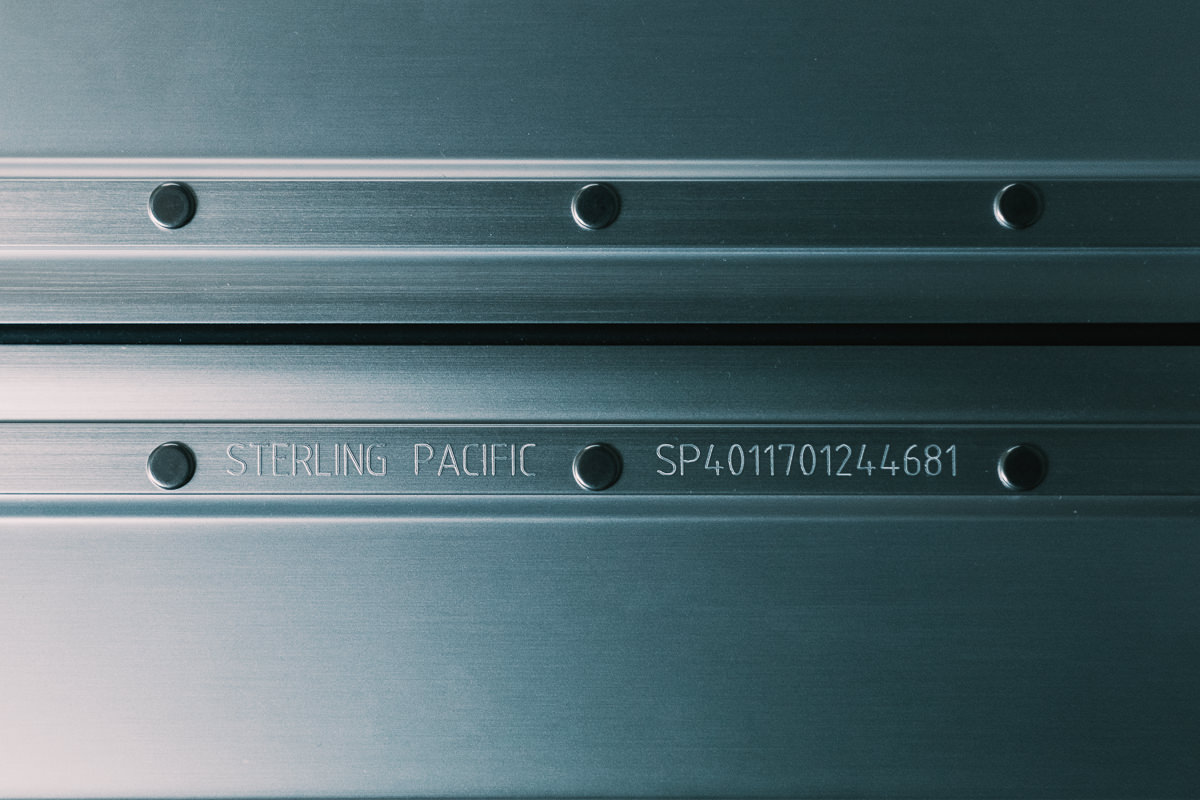
But the most distinctive difference are the steel rivets punched in throughout to hold the thing together.
For all its outstanding technical specs, it’s also simply just beautiful.
Customization
Sterling Pacific does not offer any customization other than the body color choice of silver or black, while Rimowa allows you to choose color accents for the handles, wheel cover, and luggage tag color.
Aesthetic
As I mentioned earlier, the plastic housing for the trolley handle and wheels on the RCC stand out when compared with the all aluminum on the SP40L. The classic vertical indented lines on the Rimowa is iconic and many copycat aluminum suitcases mimic this exact look for that reason.
However, I prefer the unique aviator aesthetics on the SP40. The reinforced corners and steel rivets give it an unmistakable look that stands out whenever I’ve gone. A unique batch identifier number is laser engraved into the backside. Both are small details that give make this a refined and premium product.
There’s only so much you can do visually with a silver aluminum suitcase, so I appreciated that the SP40 managed a completely different look rather than try to copy Rimowa’s design.
Warranty
Both companies offer lifetime guarantee that covers all the functional aspects of the suitcase. Broken handles and wheels are the obvious ones, but structural damage is covered as well.Neither cover cosmetic damages, which you should expect with aluminum suitcases.
Rimowa operates stores in many major cities worldwide, simplifying the repair process. In contrast, Sterling Pacific directly ships many parts for self-replacement. For larger repairs, they coordinate with local repair shops or service through their repair center in Reno, Nevada.
Technical Specs of the Sterling Pacific 40L
The boring part that goes over my head a bit.
The body uses customized 0.9mm 5000 series aluminum sheets, commonly found in the aviation industry for their excellent weight-to-strength ratio. A hydraulic press bends these sheets into shape, promising greater durability compared to standard aluminum suitcases – but we’ll see how it holds up over time.
Next, the thicker 1.5mm 5052 aluminum corners add solidity, making large deformation less likely. I’m guessing this will help retains its shape, with SAE 304 stainless steel rivets securely fastening the corners.
The trolley handle and 360-degree wheel housing are constructed from A380 aluminum, matching the top corners in thickness and sturdiness.
The construction is completely solid and I can easily sit on the suitcase without feeling any give or worry about any seams or corners bending or breaking.
Final Thoughts On The Sterling Pacific 40L Cabin
This was easily one of my new favorite acquisitions to add to my curated collection of travel gear. I feel like people generally admire aluminums suitcases, but the SP40 stands out even in this category.
More than a few strangers stopped to drop a comment about it, which still feels a little weird. I secretly like that fewer people know about or own this suitcase. Is it gatekeeping? Not really. I think eventually, you’ll see more of these around, but it’s not going to be as prevalent as all the Rimowa rolling around at airports.
The $2150 price tag is the one thing that might put some people off.
Is it worth it though?
For me, this is one of those “buy once and never again” investment purchases. Like good outdoor gear, that philosophy has served me well.
I’ve paid over $400 for a sleeping bag when you can pick one up for $30. Same with a $350 single person tent. My favorite Ghost Whisperer down jacket goes for around $200-300, when you can pick up a decent down jacket from Uniqlo for $60. The jacket, sleeping bag and tent has saved me so much space and weight on many adventures and it has been worth every penny.
I love brands like Patagonia, North Face and Wandrd because of their strong lifetime guarantees. Other than that, no one really needs an aluminum suitcase, so you’re buying it because you want your luggage to look good. Sure, I want something that will last, but I also need it to be something I’d enjoy using and looking at years from now.
Where To Buy
You can order it directly from the official website or even on Amazon. There are no discounts or promos that I’m aware of, so the prices are the same from both sites. However, for products with lifetime warranties, I always buy direct to have an official record and relationship with the company.
If you end up getting one of the Sterling Pacific aluminum cases, let me know which one you chose and what you think.
Looking for more travel inspirations? Follow me @hellokien or scroll through some of the 450+ experiences on my bucket list. Maybe you’ll find your next adventure on there.
How You Can Help
If you’ve found the content useful, you can help support this site by using these links when you plan and book your trip.
Kien is an international photographer and filmmaker based in Colorado. He captures his adventures on whereandwander.com with a focus on curated travel advice and storytelling. He is working through his bucket list and wants to help others do the same. Follow him on Instagram @hellokien.
We use essential cookies to make our website work and to optimize user experience on our site. We also set additional cookies to perform analytics, make site improvements, and show curated content. By using our site, you consent to cookies.
This Website Uses Cookies
Websites store cookies to enhance functionality and personalise your experience. You can manage your preferences, but blocking some cookies will impact how the site is meant to look and function.
Essential cookies enable basic functions and are necessary for the proper function of the website.
Name
Description
Duration
Geolocation Config
This cookie is used to store the consent settings based on the visitor's location.
30 days
Cookie Preferences
This cookie is used to store the user's cookie consent preferences.
30 days
Google reCAPTCHA helps protect websites from spam and abuse by verifying user interactions through challenges.
Name
Description
Duration
_GRECAPTCHA
Google reCAPTCHA sets a necessary cookie (_GRECAPTCHA) when executed for the purpose of providing its risk analysis.
179 days
Statistics cookies collect information anonymously. This information helps us understand how visitors use our website.
Google Analytics is a powerful tool that tracks and analyzes website traffic for informed marketing decisions.
Used only with old Urchin versions of Google Analytics and not with GA.js. Was used to distinguish between new sessions and visits at the end of a session.
End of session (browser)
__utmz
Contains information about the traffic source or campaign that directed user to the website. The cookie is set when the GA.js javascript is loaded and updated when data is sent to the Google Anaytics server
6 months after last activity
__utmv
Contains custom information set by the web developer via the _setCustomVar method in Google Analytics. This cookie is updated every time new data is sent to the Google Analytics server.
2 years after last activity
__utmx
Used to determine whether a user is included in an A / B or Multivariate test.
18 months
_ga
ID used to identify users
2 years
_gali
Used by Google Analytics to determine which links on a page are being clicked
30 seconds
_ga_
ID used to identify users
2 years
_gid
ID used to identify users for 24 hours after last activity
24 hours
_gat
Used to monitor number of Google Analytics server requests when using Google Tag Manager
1 minute
_gac_
Contains information related to marketing campaigns of the user. These are shared with Google AdWords / Google Ads when the Google Ads and Google Analytics accounts are linked together.
90 days
__utma
ID used to identify users and sessions
2 years after last activity
__utmt
Used to monitor number of Google Analytics server requests
10 minutes
__utmb
Used to distinguish new sessions and visits. This cookie is set when the GA.js javascript library is loaded and there is no existing __utmb cookie. The cookie is updated every time data is sent to the Google Analytics server.
30 minutes after last activity
Jetpack's built-in visitor analytics. It records page views, referring sites, search terms, and outbound link clicks, and also carries the shared visitor-tracking library used by Jetpack Instant Search and WooCommerce Analytics.