Gambas & Vermouth: Tagging Along Madrid’s Best Rated Food & Wine Tour | 2026 Review
Gambas & Vermouth: Tagging Along Madrid’s Best Rated Food & Wine Tour | 2026 Review
Our food tour started at half past noon on a bright and sunny day in Madrid’s Plaza Santa Ana, across from the historic Teatro Español of the Barrios de las Letras (Literary Quarter).
A place where it was once normal to hear shouts of ‘¡Mucha Mierda!‘ before a show begins.
Theater goers should be familiar with the well-intentioned ‘break a leg,’ but in Spain, they prefer to wish ‘lots of shit!’ A saying that goes back hundreds of years to a time went a successful show meant there was an abundance of horse manure outside the theater, owing to the crowds of patrons arriving in horse-drawn carriages.
It’s random, but getting these types of tickling historical facts and anecdotes is something I appreciate when a food tour doubles as a city one too.
Quick Take: Is This Madrid Wine & Tapas Tour Worth It?
Best for: First-time Madrid visitors, food and wine lovers, and anyone who wants a curated introduction to Spanish cuisines.
Not ideal for: Those looking for a tour that focuses just on eating.
Price: €85 for a 3 hour tour with a max of 12 guests. Similarly priced to other tours.
Worth it? Yes, especially early in your trip to get an orientation of the city and recommendations.
Bottom line: If you want a shortcut into Madrid’s food culture without a lot of prior research and learning about what tourist traps to avoid, this is a good option.
There’s a reason this is the top rated food and wine tour in Madrid.
What Makes This Tour Different
Tip #1: This is the exact tour I went on if you want to book it.
There’s no shortage of tapas tours in Madrid, which meant I had to comb through a ton of reviews looking for specific comments based on years of taking these tours around the world.
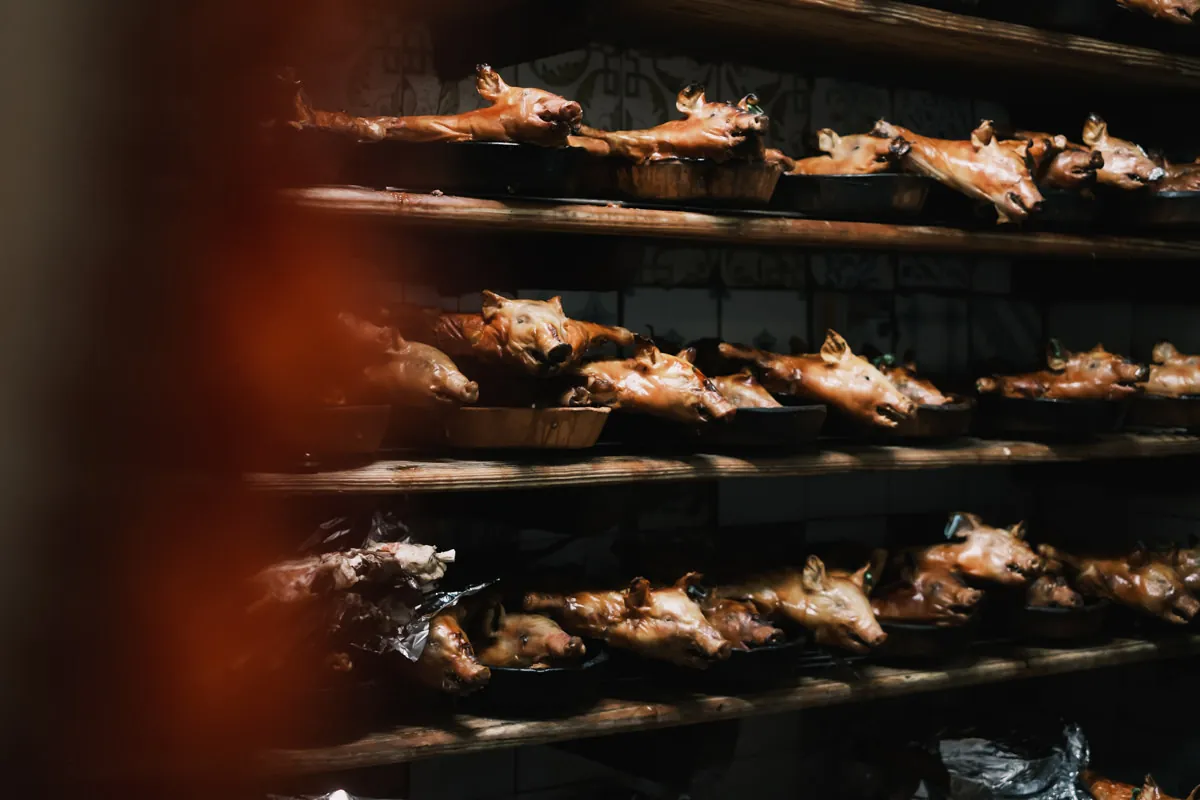
Side note: I also booked a behind the scenes visit to the world’s oldest restaurant for their famous suckling pig. I skipped it the first few times I visited Madrid because people said it was touristy, but I’m glad I gave in. It’s most tourists eating there, but still worth it for the history and the food.
Every tour will have drinks, but this one seems to have a greater emphasis on trying different regional wines.
Tip #2: If you have time, I highly recommend this food tour outside the city center
We started in the Barrio de las Letras, passing by the home that once belonged to Cervantes, one of Spain’s greatest writers and ducked into places that range from centuries-old taverns to more polished, sit-down restaurants. The pace is dictated by the group. You’re not rushed or overloaded, and there’s time to enjoy the food, and especially the drinks with conversing with your fellow participants.
The spots feel curated to offer something slightly different at each stop, highlighting different regions of wine-making and ultimately covering all the classic tapas you should be trying and dishes that you might have completely overlooked.
I found it educational in a way that didn’t feel forced. You come away understanding why Spanish wines taste the way they do, and might even look at vermouth in a completely different light beyond just an ingredient for martinis.
As always, I’m purposely withholding the locations of the stops to keep things a surprise, but you may or may not find some of them in my Foodie’s Guide to Madrid Lesser Known Food Scene.
Stop 1: Going Back In Time
Tip #3: This Prado museum + behind the scenes visit is secret way to get a last minute reservation at the world’s oldest restaurant
Our first stop was one straight out of another era, with dark wood panels and a warm tavern atmosphere. Even without the placard outside explaining the history, you can feel that this place has been witness to centuries of social gatherings.
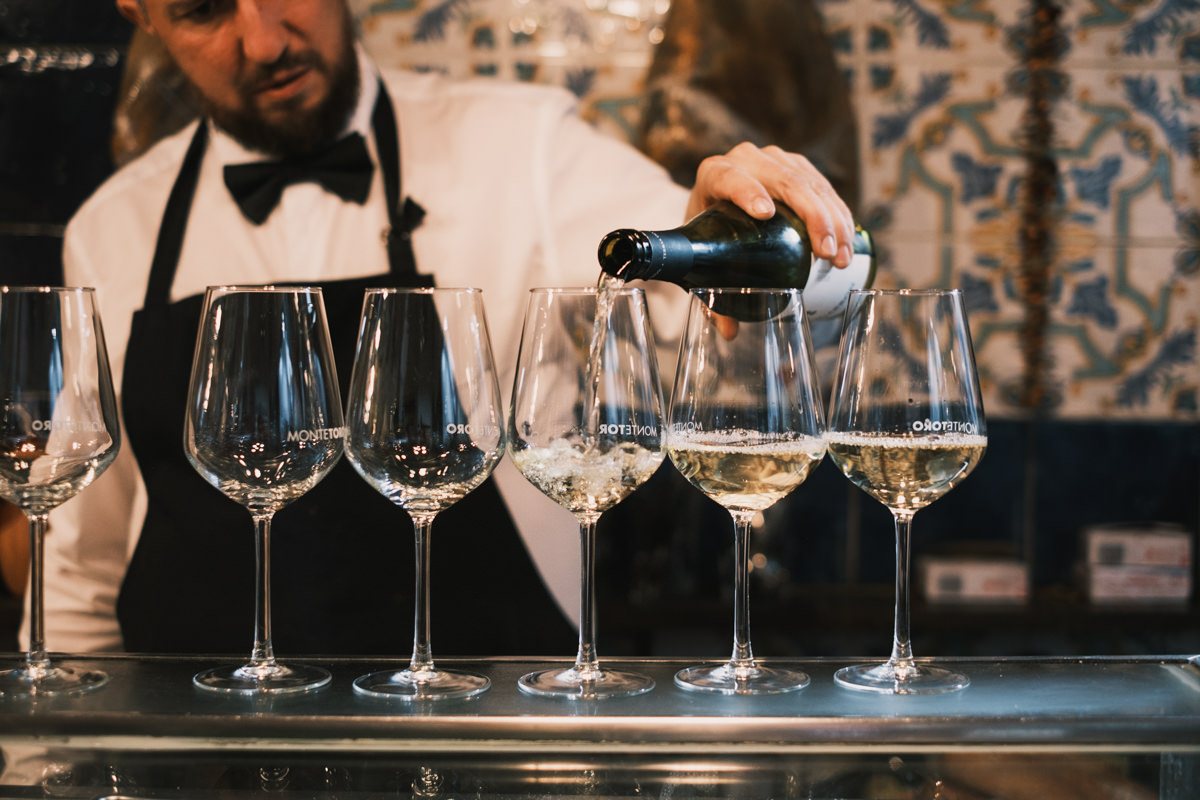
We started with the wines first. A white from the northwestern Galicia region made with the Godello grape, softer and more rounded than the more famous Albariño varietal. It is followed by a bold and almost smoky red from Jumilla (southeastern Spain) made from Monastrell grapes.
While each person was deciding on white or red, our guide conferred with the bartender to decide on what tapas to get from the changing daily menu.
Note: I noticed that some tours will have a set ‘menu’ prepared at each stop, while others are more improvised chooses dishes based on the group and the local offerings of the day. This was one of the latter.
Tip #4: Some tapas or paella cooking classes are more demonstrations. This one is hands-on and you basically learn to cook a 4 course meal.
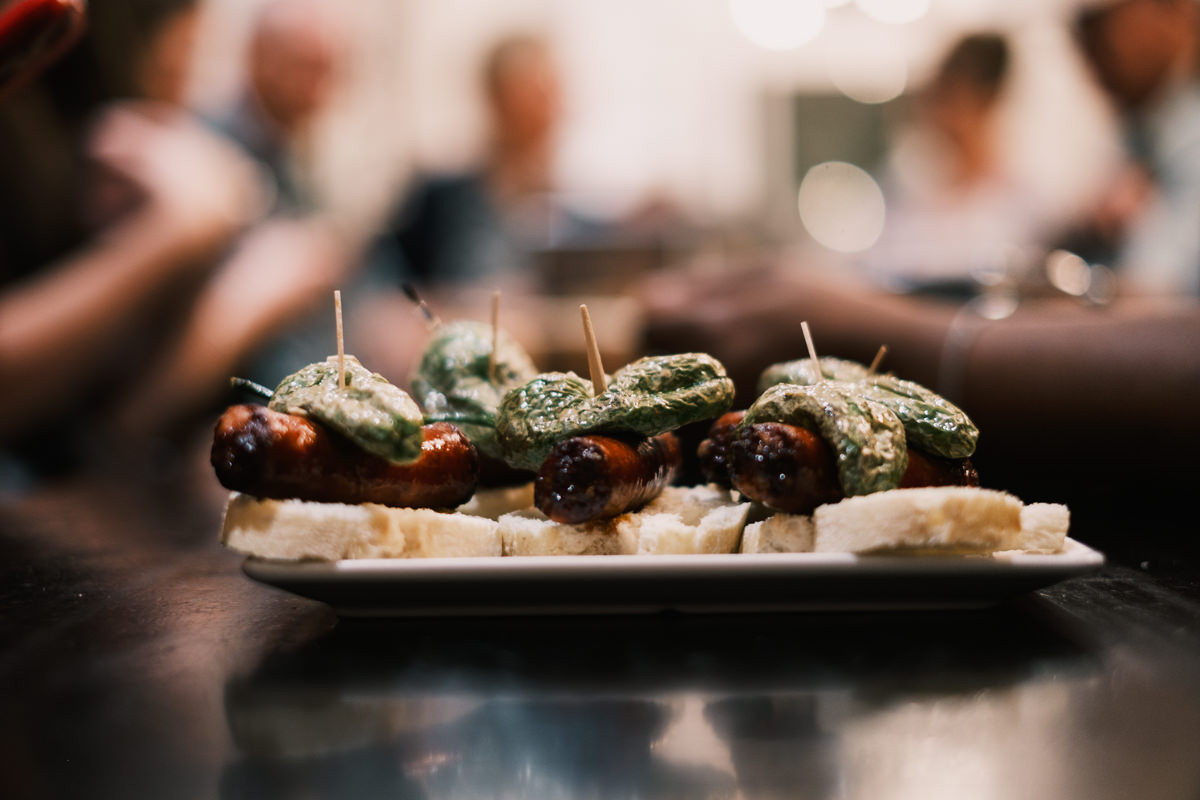
The food comes quickly to accompany the wine. Creamy Russian salad (an odd choice), blistered Padrón peppers (one of my favorites), marinated and deep fried dogfish (cazón en adobo from Andalusia), grilled eggplant, and sliced morcilla (blood sausage). I’m personally a fan, but it’s not something a lot of people would knowingly order. Everyone seemed to enjoy it though.
Stop 2: Wine, Done Properly
The next stop was a hybrid gourmet shop and wine bar. In the front, you have a cute delicatessen plucked right out of the movies, complete with a beautifully curated selection of cheese and charcuterie as well as hundreds of reasonably priced bottles of wines along the wall for you to browse from.
We head to the back, which felt like stepping into someone’s home, and in a way it is, since the back area was a later expansion into the owner’s original home.
Tip #5: I’m a big fan of Turkish baths and the whole Hammam experience.
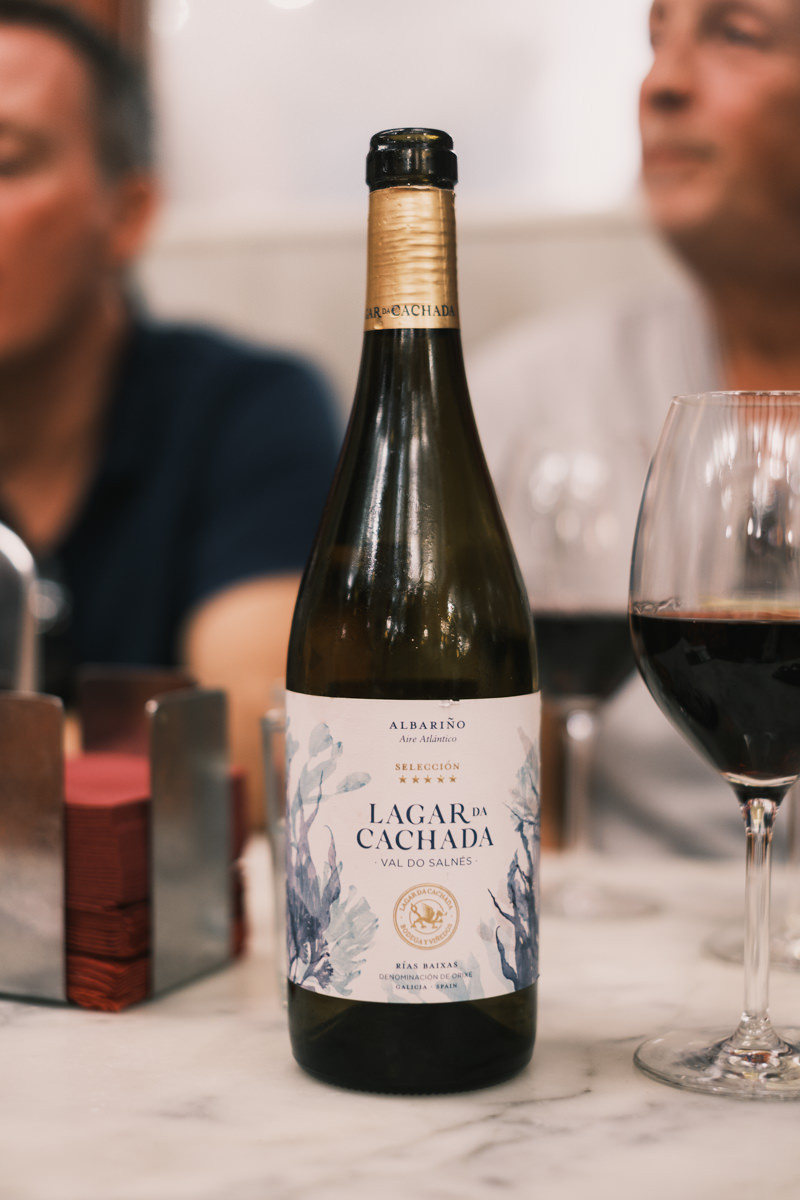
An Albariño with a distinctly different personality from the earlier white. It is sharper and more acidic, a product of the coastal air and granite-rich soil of the Rías Baixas region in northwestern Spain. The red is from the Bierzo region made with Mencía grapes. It is lighter and more delicate than typical reds, with subtle cherry notes that is similar to a Burgundy.
The pairings here are simple, but so good. Nutty cheese with quince jam on toast, thinly sliced air-dried beef (cecina) similar to Italian bresaola, and classic pan con tomate topped with acorn-fed Iberian ham. I could so picture myself having these combinations sitting on a hillside vineyard.
Stop 3: A Taste of Old Madrid
In my opinion, a good food tour isn’t just about what’s on the plate, but should give you a sense of the rhythm of city itself.
The third stop takes you into a lively, slightly chaotic, and deeply traditional spot. One where you sip house-made vermouth, both red and white, served straight like the locals drink it, and pair it with their famous gambasa la plancha.
This place is not exactly a secret and their popularity is deniable by the open to close crowds. If you’re lucky enough to get a counter space, you’re standing shoulder to shoulder with your neighbors. No one cares. Everyone is occupied with food or conversation. The floor is littered with crumpled napkins and receipts, an unapologetically casual custom in fact. It’s touristy but also wholly authentic, and truly a Madrid experience.
Tip #6: There are three via ferrata routes in Madrid if you want a bit of adventure.
There is history here too that you can see right on the wall and in the cooking station right by the door. If you can avoid blocking the entrance, you get a front row view of the terra cotta cazuelas bubbling with garlic butter and shrimps (gambas al ajillo).
This place goes through 6000 kg of shrimp a month.
You might have ended up here anywhere, food tour or not, but many might be intimidated by the whole experience, so it was nice to have everything arranged and ordered for us.
Stop 4: A Refined Ending
Tip #7: If you’re not heading to Sevilla or Granada, catch this Flamenco show. It’s one of the bigger productions, which makes a difference.
The final stop is a quiet sit-down in a private room upstairs from the restaurant’s main dining room. No complaints about the last stop, but it was a welcome reprieved from the crowds and noise.
Here, we get a local wine and Spanish classics that more people are generally familiar with.
A local white from the Madrid with Malvar grapes, a classic Rioja red that blends Tempranillo, Grenache, and Masuelo grapes, and Cava (Spanish version of French champagne or Italian prosecco) from Catalonia to close things out.
To pair, we had perfectly cooked tortilla española, creamy croquettes that disappeared too quickly, and crispy fried milk bread paired with hazelnut ice cream for a sweeter finish.
Everything We Ate and Drank On The Madrid Gourmet Food and Wine Tour
Spanish wines from different regions (Galicia, Jumilla, Bierzo, Rioja, Madrid, Catalonia)
House-made vermouth (both red and white)
Classic Tapas: tortilla española, croquettes, Padrón peppers, and pan con tomate, morcilla, fried eggplants, and ensaladilla Rusa
Iberian ham and air-dried beef (cecina)
Garlic shrimp and deep-fried marinated dogfish
Cheese pairings with quince jam
Fried milk bread with hazelnut ice cream
Is It Worth It?
Tip #8: If you have time, there’s the Barranco de Somosierra canyon about 1.5 hours away from Madrid.
Definitely, if you appreciate anecdotes as well as consumption, and even more so if you are interested in learning a bit about Spanish wine.
Could you do something similar on your own? The answer is always yes. As a group, it’s easy to get a bunch of dishes to share, but if you’re alone or a couple, this is a great value. Also, doing it alone means you would miss the stories, the knowledge, and the guidance that makes the whole thing more an experience rather than just a feeding. You might also walk by something that’s hidden in plain sight.
Our guide did his part to bridge history, culture, and food in a way that gives each stop a bit more meaning. And I like that the group was quite small, which allowed us to travel around without feeling like you’re being led by a leader with a megaphone or headset.
My main tip, if you want to do the tour, is to do it early in your trip. You will leave with some good recommendations to continue your food journey around Madrid.
Practical Tips and Booking Information
The tour starts at 12:30 pm and 7 pm, which are perfect times to eat in Spain. Although you’re sampling, it’s enough food and drinks to be full by the end.
Don’t forget to drink water. With a drink at each place, that’s 4 drinks over 2-3 hours.
Wear comfortable walking shoes and clothes. The walks aren’t too long between stops, but you will still be walking outside. Be mindful, especially if you’re doing this during the warmer months.
Here’s the exact tour if you want to book it free cancellation.
Final Thoughts
There are a few unique food experiences that I recommend on my Madrid short list if you want further reading. Food tour wise, there are three types I generally look for to recommend.
One that is more of a day trip outside the city, like to the Ribera del Duero for wine tasting and lunch, one that takes place in a non-touristy area away from the center like the one I did in Chamberi, and if it’s your first time in a city, a historic center food tour like the one you’ve been reading about that you can do early on in the trip and knock off two birds with one stone.
And for Madrid, of course a visit to Sobrino de Botin, the oldest restaurant in the world. Like I said early, ignore the whole ‘it’s a tourist trap’ thing. At the end of the day, you’re there because you want to say you’ve eaten at the world’s oldest restaurant.
Is it the best restaurant in Madrid? No, but the pig and lamb are mouthwatering and it’s even better if you get to do a behind the scenes visit before the restaurant opens to see all the suckling pigs being prepared ahead of the lunch rush.
It’s paired with a private visit to the Prado museum, but more importantly, it is also a little hack to get last minute reservations to the restaurant.
Lastly, you can also check out my other guides around Spain if you’re visiting more than just Madrid.
Kien is an international photographer and filmmaker based in Colorado. He captures his adventures on whereandwander.com with a focus on curated travel advice and storytelling. He is working through his bucket list and wants to help others do the same. Follow him on Instagram @hellokien.
We use essential cookies to make our website work and to optimize user experience on our site. We also set additional cookies to perform analytics, make site improvements, and show curated content. By using our site, you consent to cookies.
This Website Uses Cookies
Websites store cookies to enhance functionality and personalise your experience. You can manage your preferences, but blocking some cookies will impact how the site is meant to look and function.
Essential cookies enable basic functions and are necessary for the proper function of the website.
Name
Description
Duration
Geolocation Config
This cookie is used to store the consent settings based on the visitor's location.
30 days
Cookie Preferences
This cookie is used to store the user's cookie consent preferences.
30 days
Google reCAPTCHA helps protect websites from spam and abuse by verifying user interactions through challenges.
Name
Description
Duration
_GRECAPTCHA
Google reCAPTCHA sets a necessary cookie (_GRECAPTCHA) when executed for the purpose of providing its risk analysis.
179 days
Statistics cookies collect information anonymously. This information helps us understand how visitors use our website.
Google Analytics is a powerful tool that tracks and analyzes website traffic for informed marketing decisions.
Used only with old Urchin versions of Google Analytics and not with GA.js. Was used to distinguish between new sessions and visits at the end of a session.
End of session (browser)
__utmz
Contains information about the traffic source or campaign that directed user to the website. The cookie is set when the GA.js javascript is loaded and updated when data is sent to the Google Anaytics server
6 months after last activity
__utmv
Contains custom information set by the web developer via the _setCustomVar method in Google Analytics. This cookie is updated every time new data is sent to the Google Analytics server.
2 years after last activity
__utmx
Used to determine whether a user is included in an A / B or Multivariate test.
18 months
_ga
ID used to identify users
2 years
_gali
Used by Google Analytics to determine which links on a page are being clicked
30 seconds
_ga_
ID used to identify users
2 years
_gid
ID used to identify users for 24 hours after last activity
24 hours
_gat
Used to monitor number of Google Analytics server requests when using Google Tag Manager
1 minute
_gac_
Contains information related to marketing campaigns of the user. These are shared with Google AdWords / Google Ads when the Google Ads and Google Analytics accounts are linked together.
90 days
__utma
ID used to identify users and sessions
2 years after last activity
__utmt
Used to monitor number of Google Analytics server requests
10 minutes
__utmb
Used to distinguish new sessions and visits. This cookie is set when the GA.js javascript library is loaded and there is no existing __utmb cookie. The cookie is updated every time data is sent to the Google Analytics server.
30 minutes after last activity
Jetpack's built-in visitor analytics. It records page views, referring sites, search terms, and outbound link clicks, and also carries the shared visitor-tracking library used by Jetpack Instant Search and WooCommerce Analytics.