Best Cooking Class In Bologna? How I Ended Up Making Tagliatelle In A Bolognese Home
Best Cooking Class In Bologna? How I Ended Up Making Tagliatelle In A Bolognese Home
At 5:58 pm, I stood outside Cristina’s apartment entrance, just a few minutes walk from historic Piazza Maggiore, and pressed a buzzer to be let in. This was Europe, so I was used to even Starbucks and H&Ms being in some grand ornate building, but it was still a little strange walking up to a historic residential apartment building for a cooking class. However, as soon as I entered, Cristina and her husband, Enrico, greeted me so warmly, that I momentarily forgot I was here for one.
It felt like visiting a friend’s home for the first time.
I found Cristina and cooking experience through Cesarine, a community of vetted local home-cooks offering cooking classes inside their homes, not just in Bologna, but all around Italy.
It’s the closest thing I’ve found to cooking with an Italian nonna, something that’s long been on my bucket list.
Cristina offers several culinary experiences, including one with a market visit and cooking class and dinner afterwards, but I was visiting on a Sunday when the market was closed. She suggested instead her alliterative tigelle, tagliatelle, and tiramisu class. Twist my arm.
Quick Summary TL:DR
This is Bologna. There are no shortage of food tours (I recommend this one in the city and this one leaving the city) and cooking classes, which makes it easy to get overwhelmed by all the choices. I looked at many different options and came up with a short list of experienced I wanted to try out. This was my favorite.
Best For: Travelers seeking a intimate cooking experience in a local Bolognese home instead of a commercial workshop kitchen.
Hands-On: High. Roughly 70/30 participation vs demonstration.
Dishes Made: Tigelle, Tagliatelle, Tortelloni, and Tiramisu.
Price: €147 per adults / €74 per child
Worth It?: Absolutely. Hits differently than a large group cooking class.
Inside Cristina’s Bed and Breakfast
The class took place in the kitchen of a bed and breakfast she opened in 2008, one of the firsts in Bologna. The space is a mix of both modern and antique pieces that exudes a cozy and elegant charm. Old books, ornate pieces, and family photos line the shelves behind the dining table that makes this place feel like a home away from home for guests.
I love photographing spaces, and my immediate instinct was to start snapping away, but I thought I should get to know the couple first.
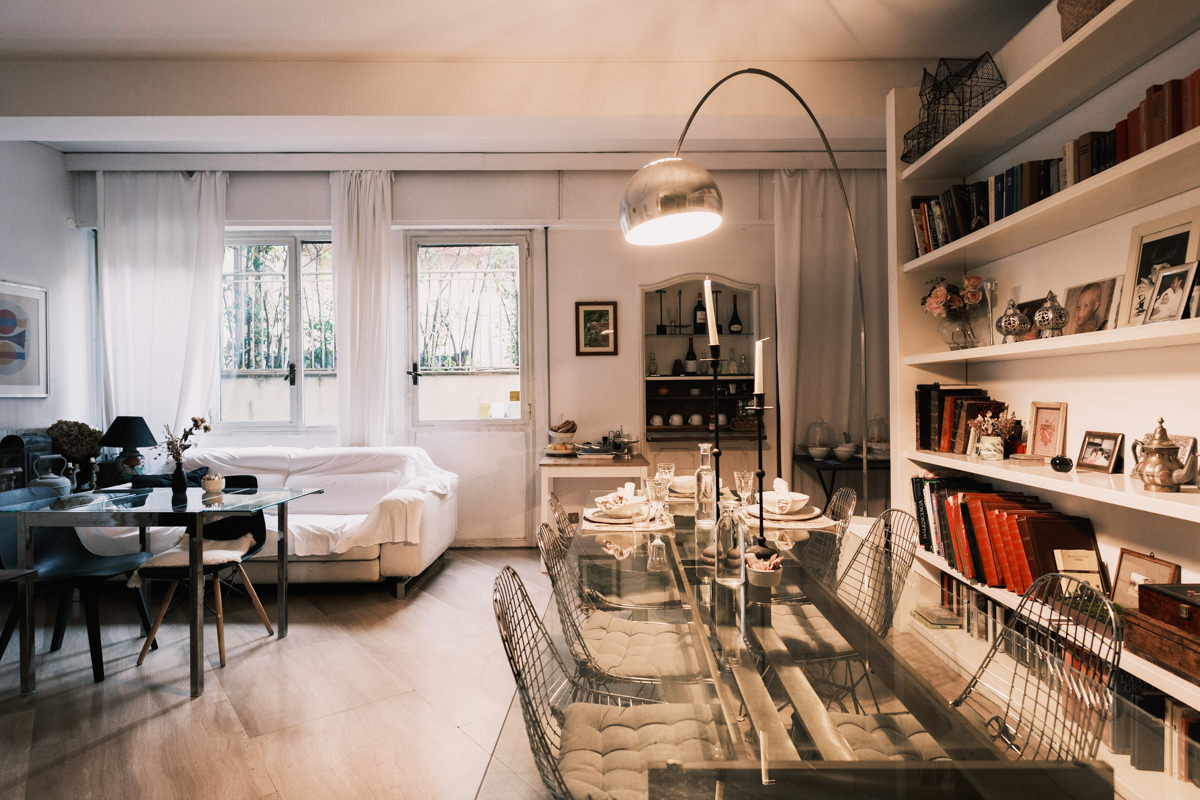
Cristina and Enrico offered me a drink while we made our introductions and immediately got into talking about our travels and one of my favorite destinations, Japan.
The bed and breakfast was her family home that was converted to host guests. They still live nearby, but spend a fair amount of time here with the B&B and cooking classes.
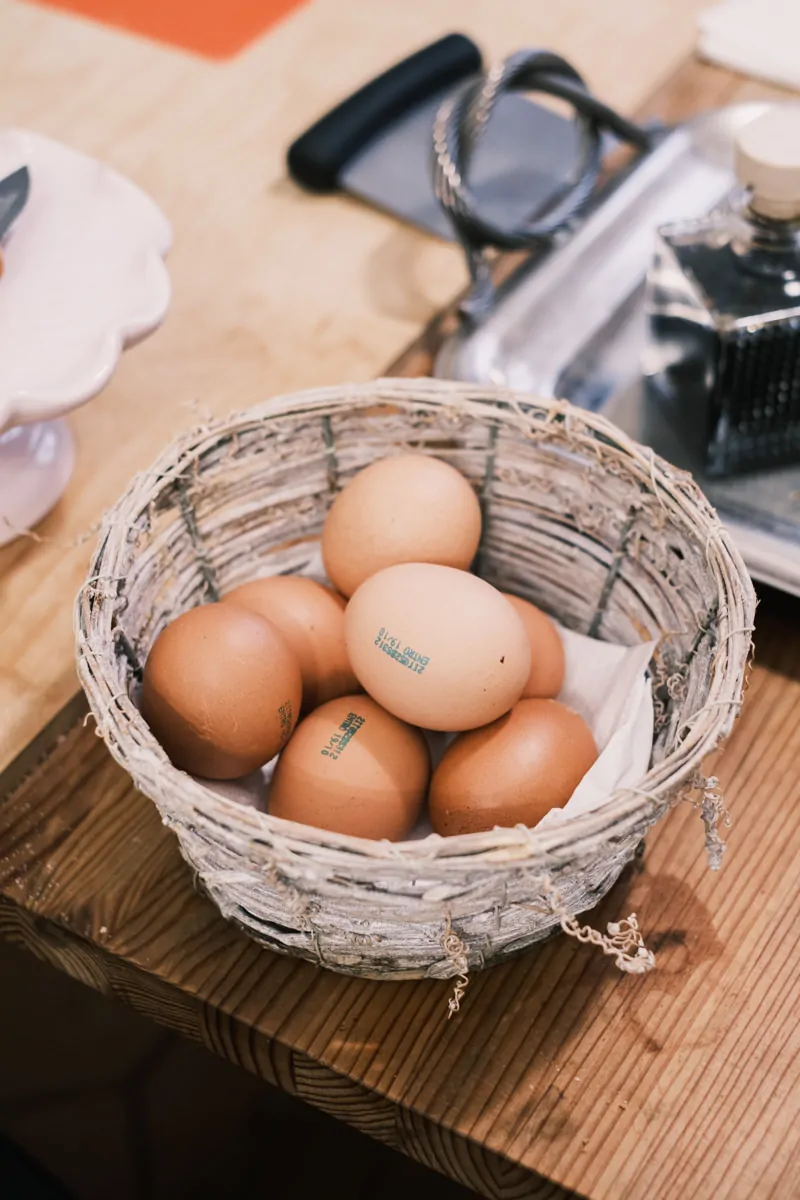
In the kitchen, bottles of oil, balsamic vinegar, and honey sat next to a basket of eggs, hand-labeled flour and sugar jars, knives, scrapers, garlic presses, sifters, and every kitchen tool you’d expect to need in for a cooking class. It looks chaotic, but everything has its own place.
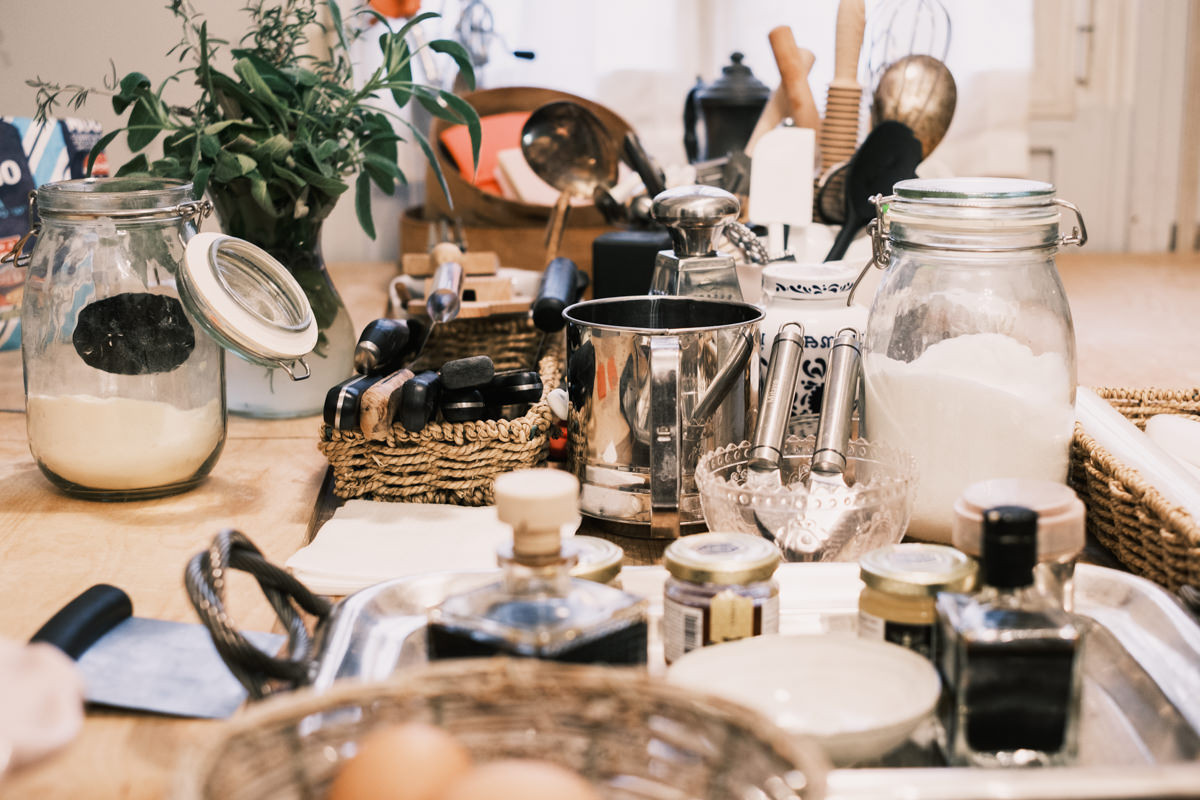
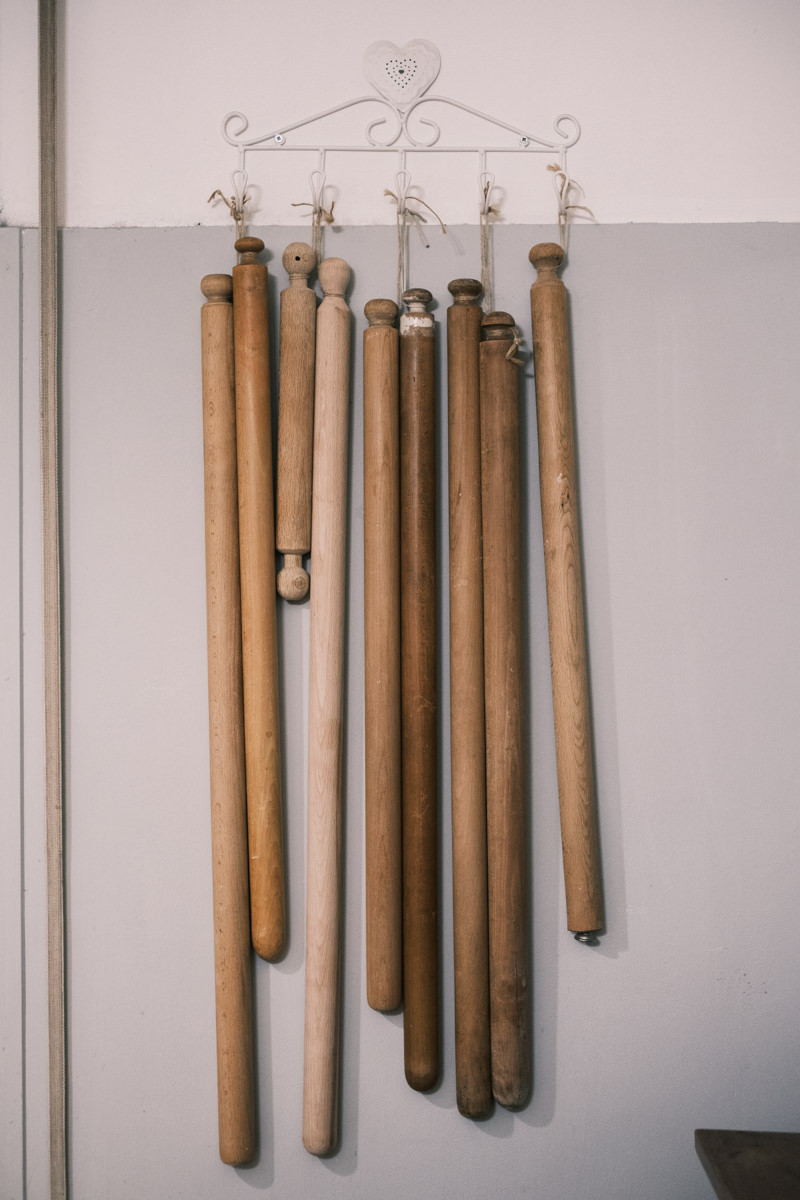
I made a mental note to ask about the half a dozen rolling pins on the wall and another dozen in a basket behind me. One of the many questions I would be firing away at poor Cristina through the eye-opening evening of culinary education. One that exceeded my expectations and raised the bar for what I’d be looking for in a cooking class going forward.
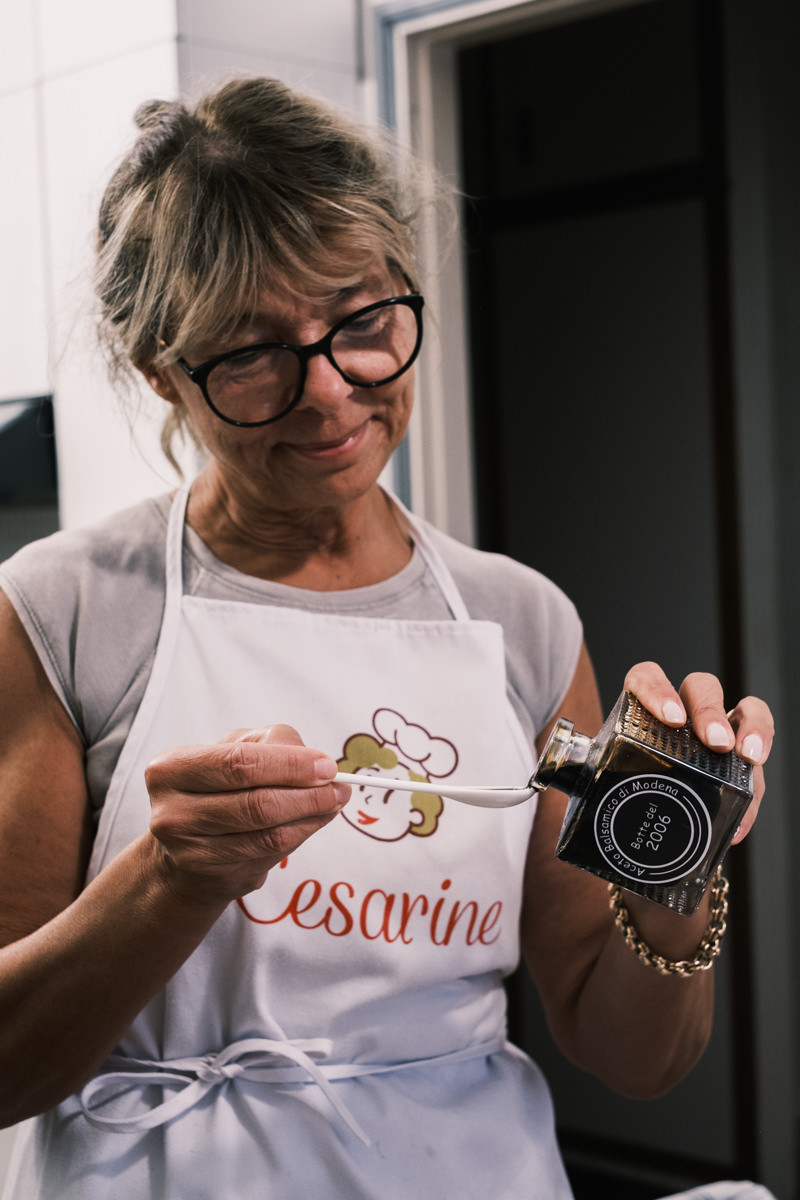
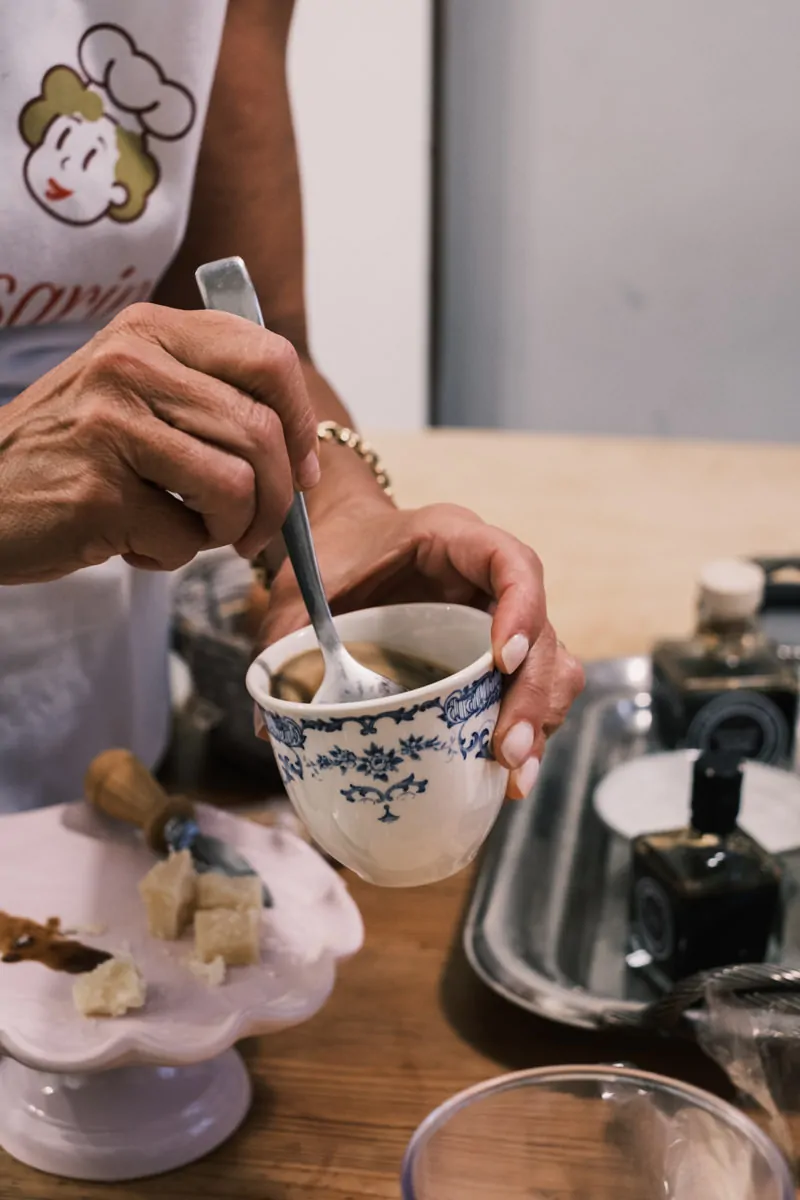
We began with a tasting. Cristina carefully offered me a spoon of aged balsamic from nearby Modena, the region famous for its balsamic vinegar. This one was bottled in 2006, thick and syrupy, with a delightful balance of sugar and acidity.
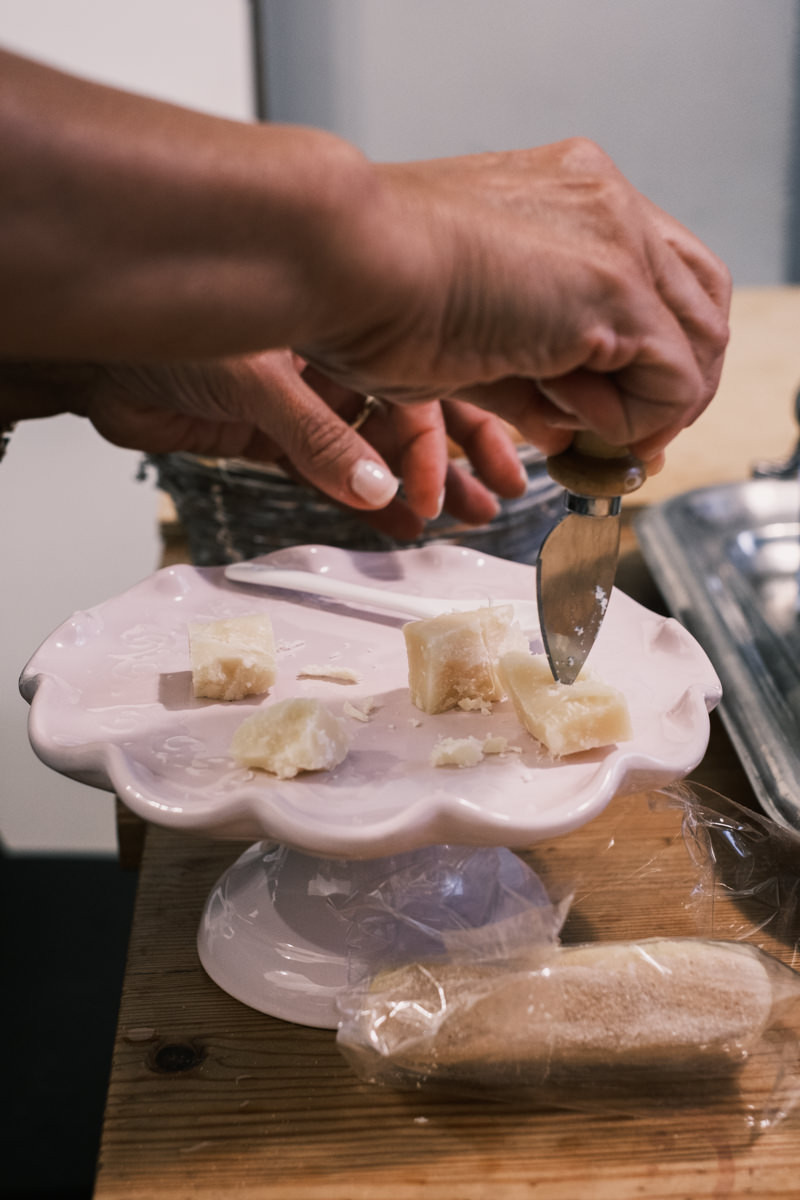
“Try it with the parmigiano.”
TIP #1: Combine a trip to cheese factory with the Ferrari museum to save time.
It was sublime, and I wouldn’t be surprised if she fueled those muscular biceps and delts with just the protein from the parmesan and all that pasta kneading.
Making The Tiramisu
We started with the tiramisu, to give it time to set while we make the tagliatelle and tortelloni, two different pastas that will pair with the ragù alla Bolognese, the famous meat sauce originating from the same city.
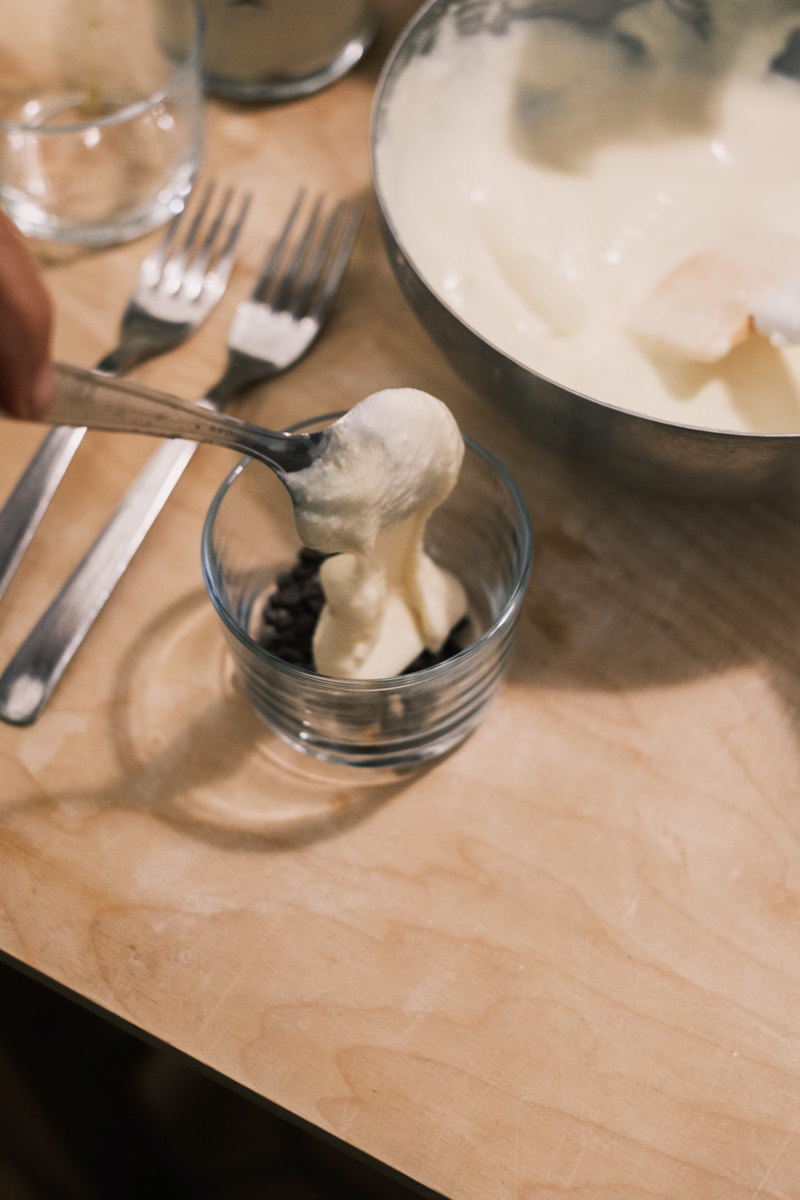
In Italy, every region seems to have slight variations to classic recipes. I’ve prepared tiramisu many times, but seeing first hand how Cristina whips her separated egg yolks with sugar and then adding a pinch of salt to the whites and marscapone showed me how I can improve my own the next time around.
TIP #2: I recommend looking for a local home cooking class.
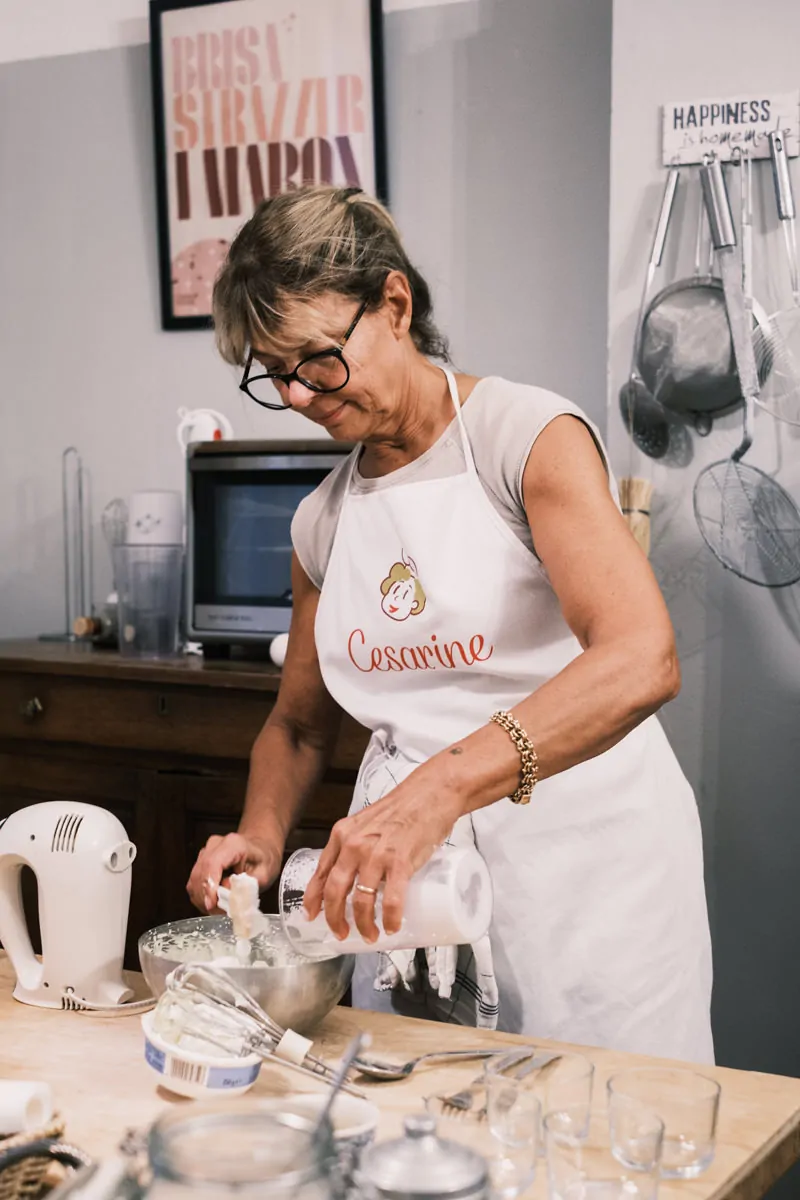
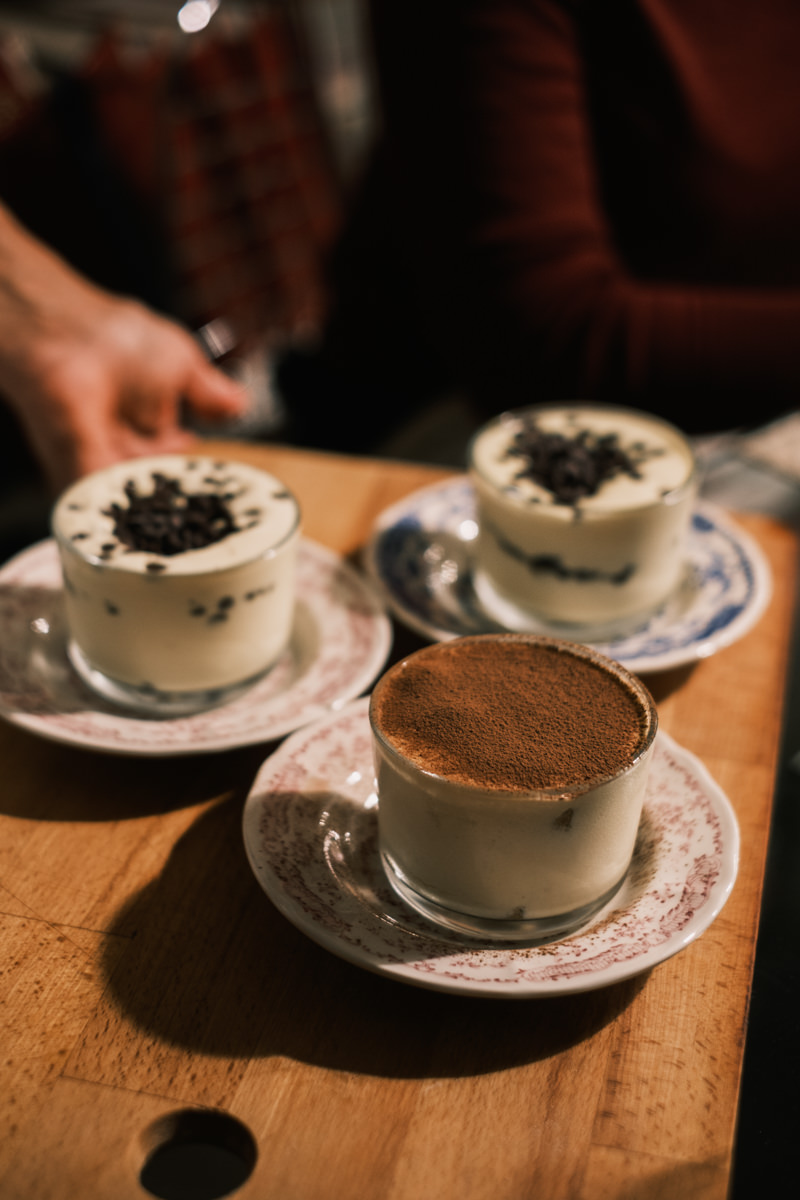
Instead of the large baking dish, she prepares them individually, breaking up the espresso-soaked savoiardi (lady fingers) to fit inside a clear dessert cup and creating two layers with the luscious cream and a dusting of cacao powder on top. She prepares a variation with chocolate chips instead of the savoiardi (lady fingers) for a gluten-free option.
Protein Percentage In Flour And Egg Weights
TIP #3: If there is one place to take a food tour, it’s in Bologna.
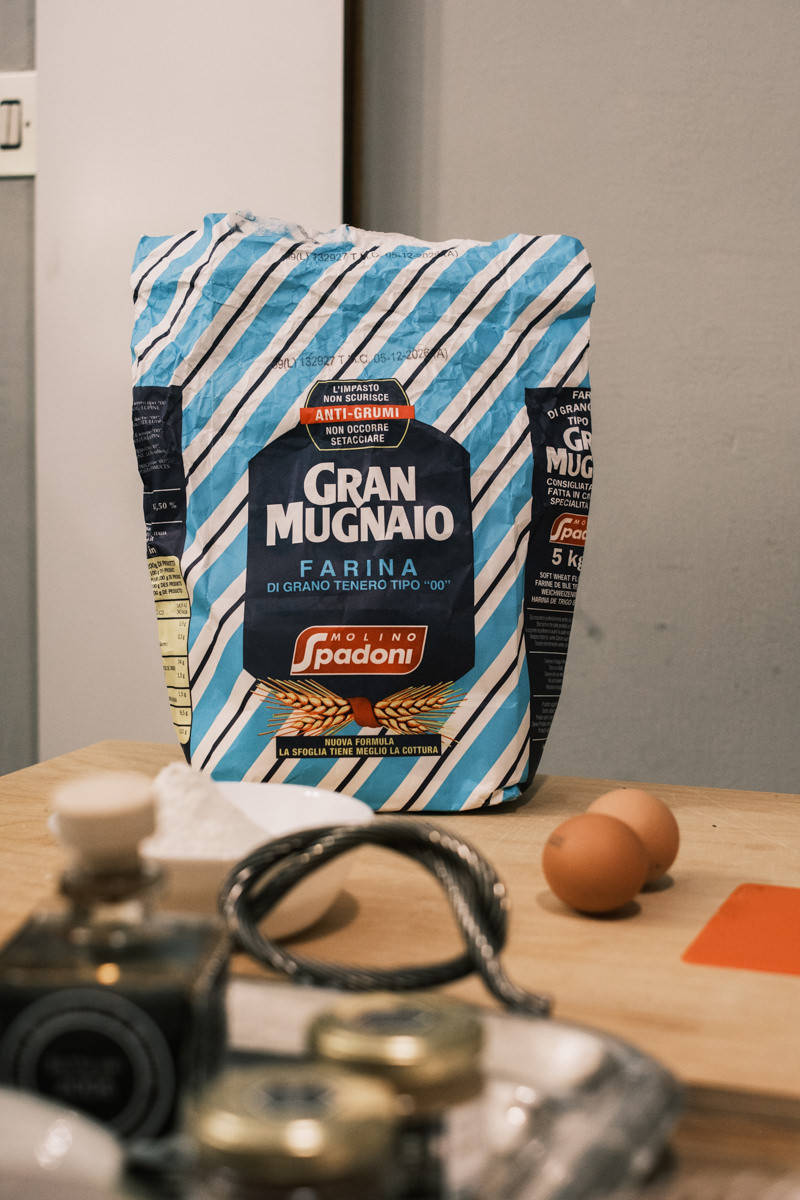
Next, we moved to the pasta dough, but not before we got into a whole discussion about protein percentages and the weight of eggs, because in my ignorance, I never once thought about flour having anything but carbohydrates, and that there were even different protein percentages in different flours.
For fresh egg pasta, Cristina uses 00 soft wheat flour with a weaker protein percentage of around 8-12%. A lower protein ratio yields a more delicate and smoother dough in contrast to a chewier and more structured dough that you’d want for something like bread.
You’ll also want to use the 1 egg to 100g of flour golden ratio, but you need to make sure that you’re using an extra-large egg that’s about 75g. For every 5g lighter in egg weight, you’ll want to reduce the flour by 10g to ensure the right moisture in the dough.
Was it always this precise?
Cristina also tells me that men have warmer hands than women, so that will affect the dough as well when you’re kneading.
Just a glance and she added a bit more flour while I was kneading to offset the stickier dough from my warmer hands.
Years of practice will teach cooks how to check for the right firmness after a dough has rested, and whether it needs more time to relax if it is too firm.
So much that I never even thought about when I tried to make fresh pasta.
About Those Rolling Pins and The Art Of Kneading
TIP #4: If you can, find a local food guide.
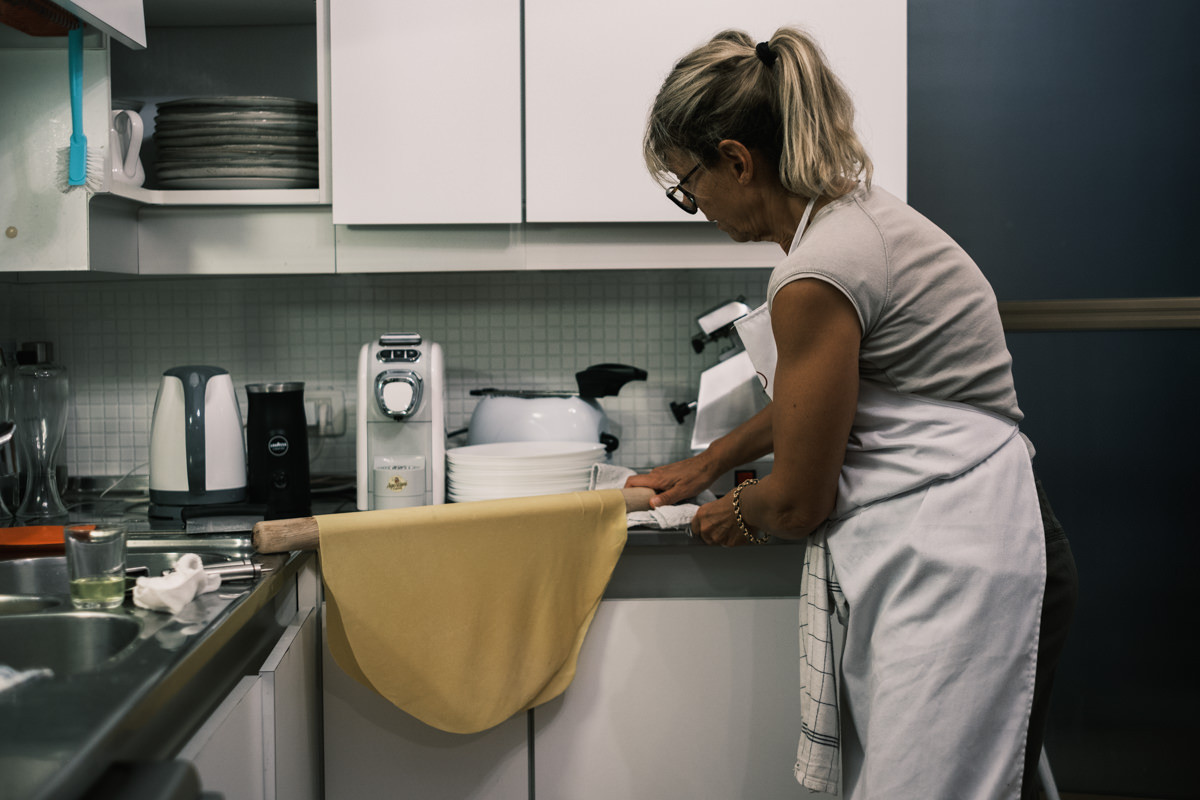
While kneading the dough, I remembered to ask about all the rolling pins on hanging from the wall. She said those were all the ‘retired’ ones that have worn and warped over time. Some have been passed down that she’s had her whole life.
The different sizes allow you to evenly work different quantities of dough with a consistent and even roll.
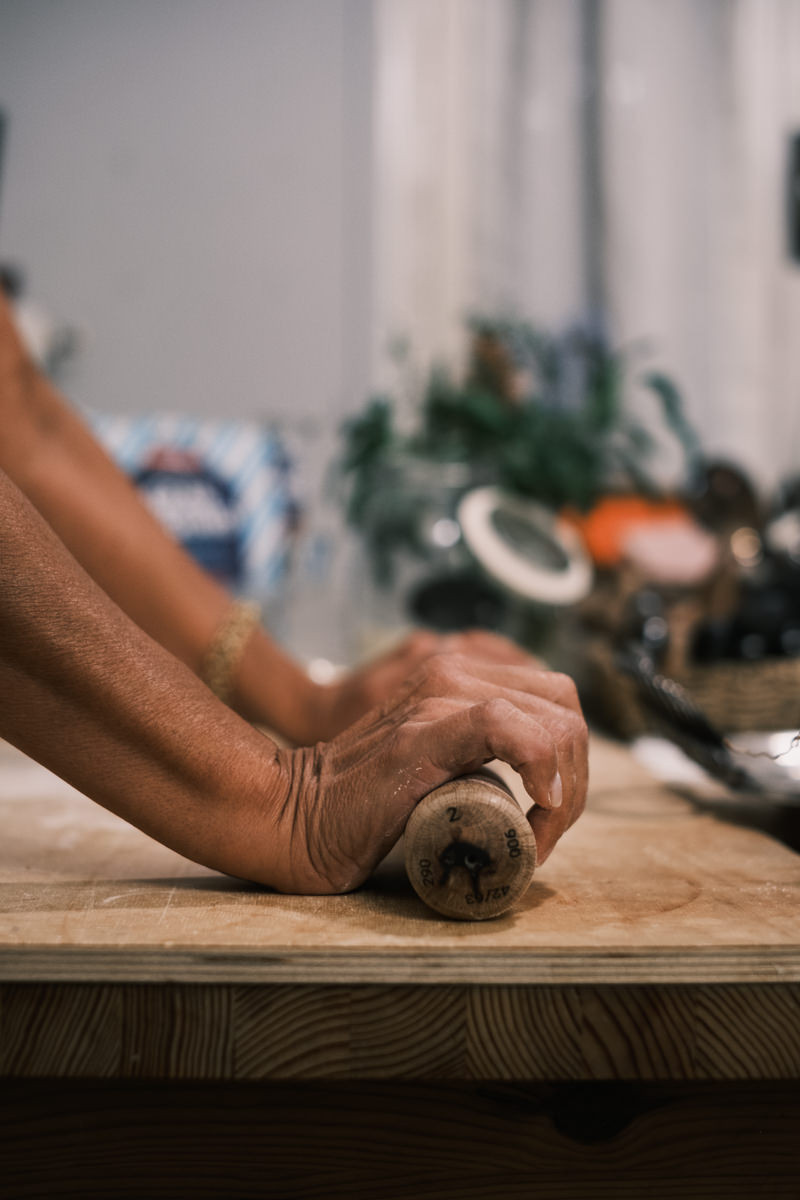
You have to apply the right amount of pressure using the base of your palms to push the pin forward and use your fingers to roll it back. Each time, flattening and expanding the dough outwards. It’s in the feel, and learning that feel takes years of constant practice.
It’s no more evident than in how differently our sheet of pasta turned out – a thin and even oval sheet for Cristina, while mine was…something else.
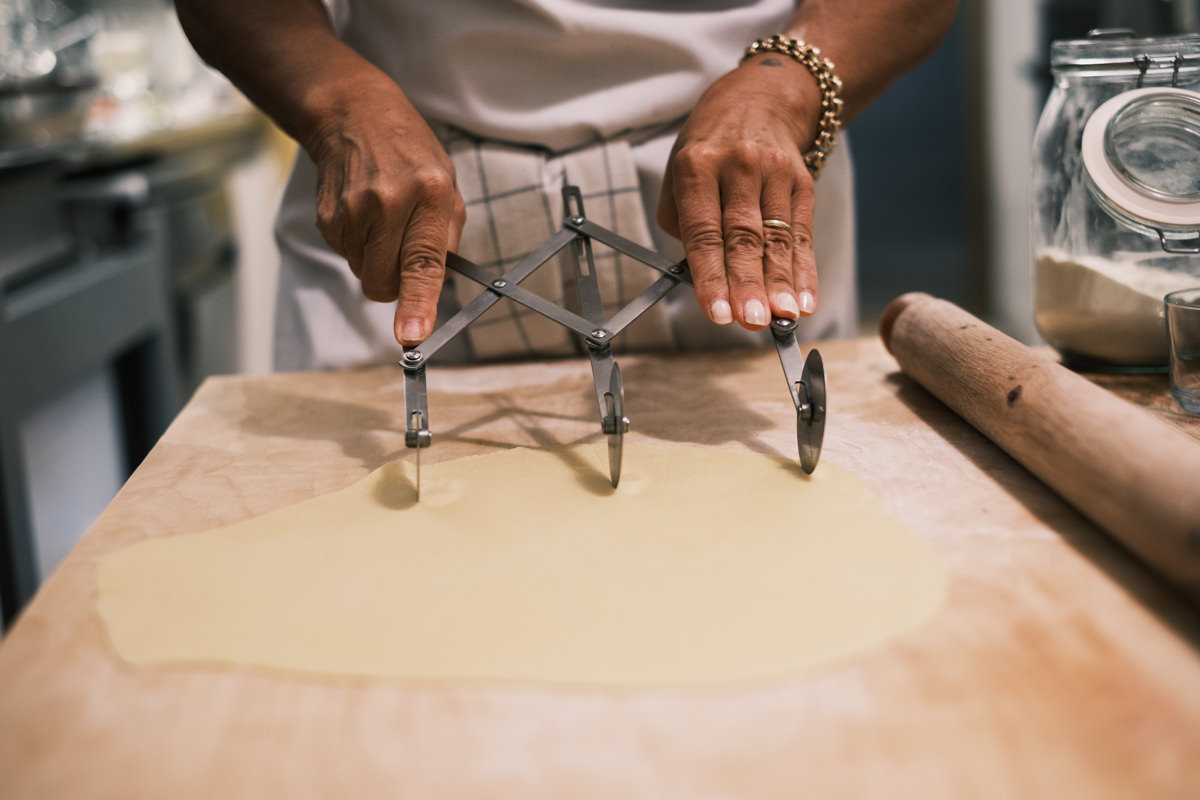
Cristina was too nice about it and used a 3 wheel pasta cutter to make the most of my sheet for the tortelloni.
Preparing The Tagliatelle and Tortelloni
TIP #5: You’re so close to Parma. Try to make time for a visit.
The class was equal parts show and follow. Cristina would demonstrate something once and have me finish.
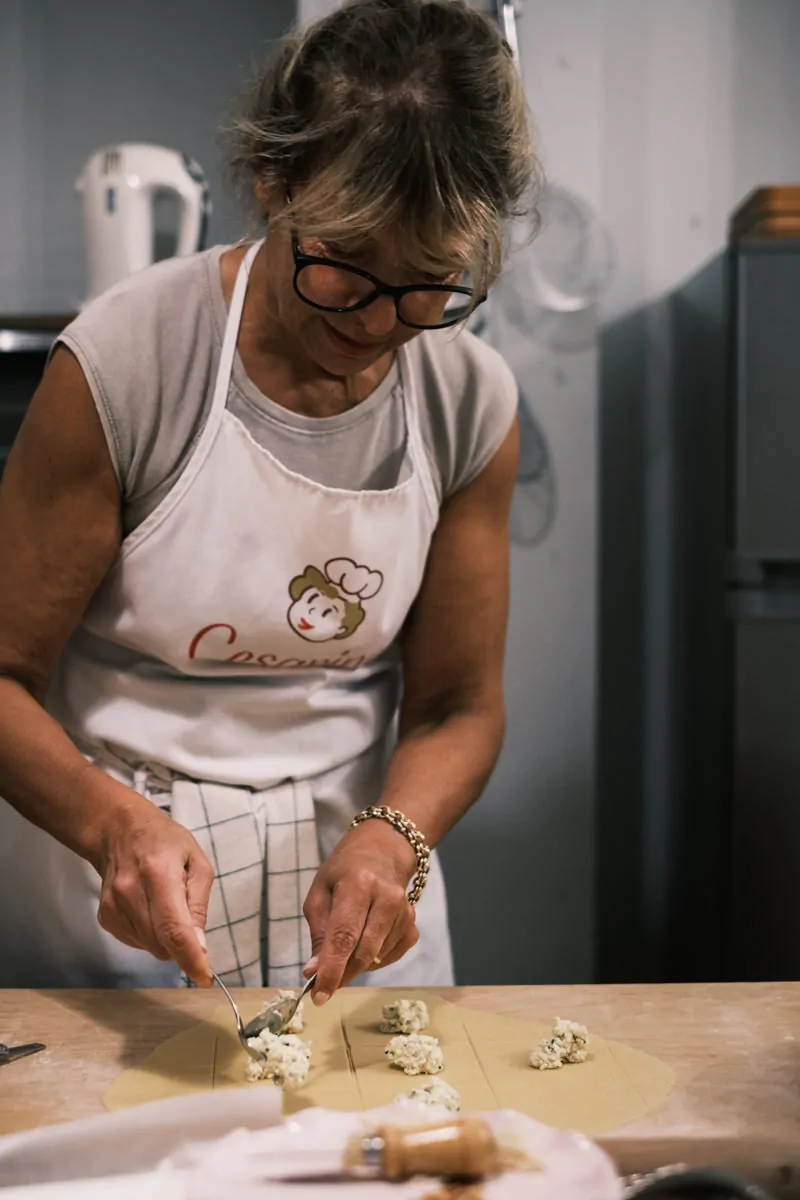
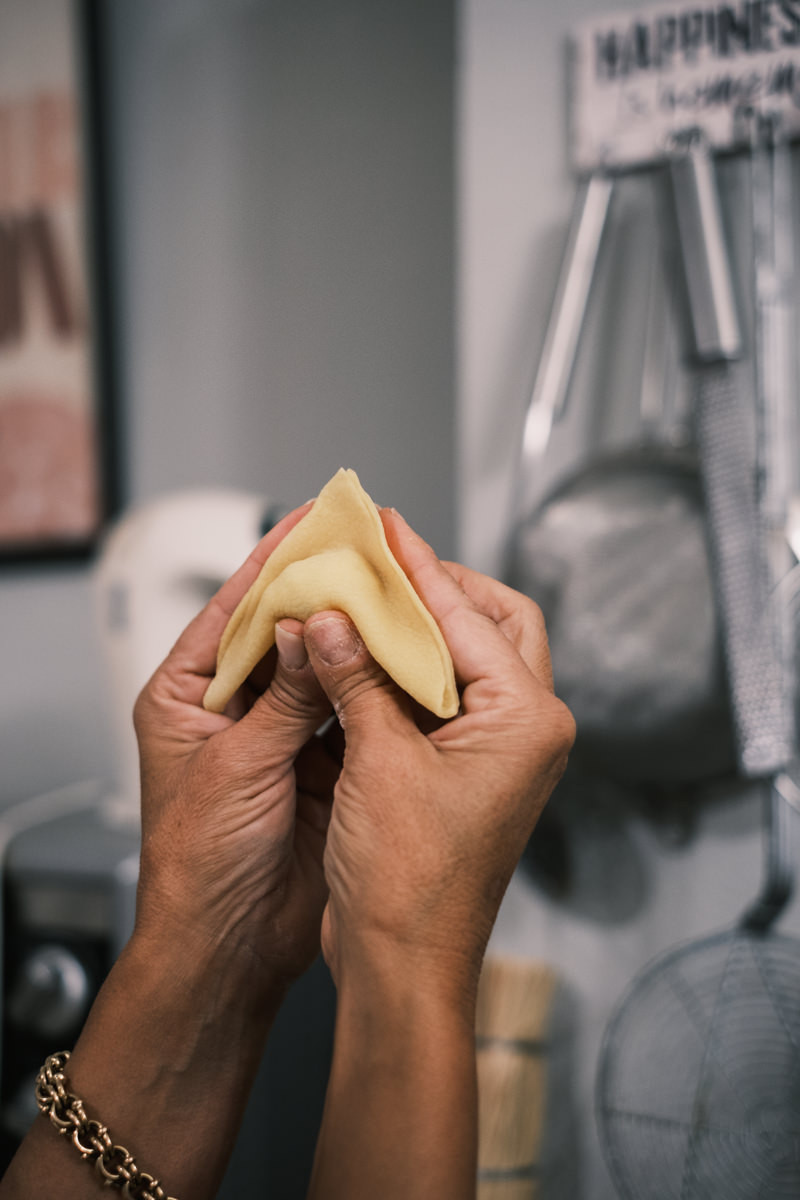
After I managed to get square pieces from my misshapened dough, we spoon in the filling prepared earlier consisting of ricotta and parmesan cheese with chopped parsley, egg, and salt. We closed and sealed each one into a triangle and then Cristina demonstrated a hold and pinch technique to get that iconic opening that’s meant to resemble the navel of Venus, the goddess of love.
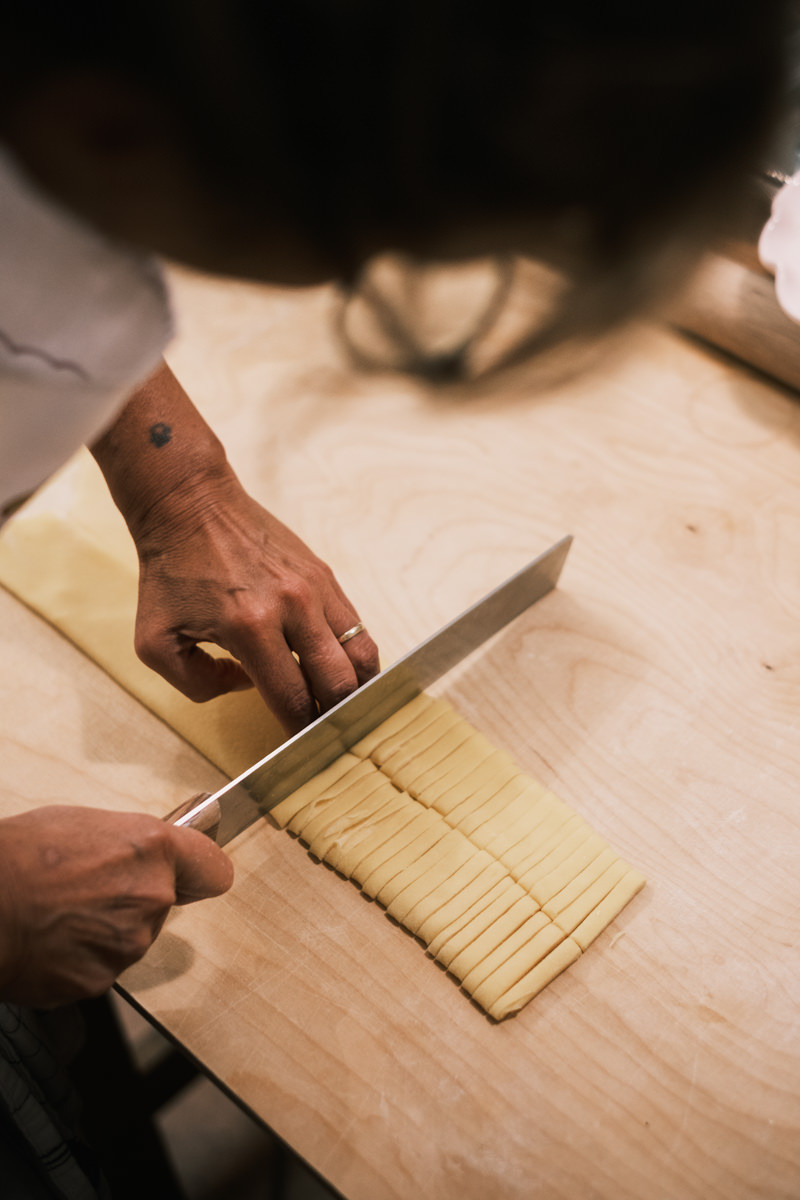
For the tagliatelle, we carefully fold over the large sheet of pasta that had been hanging to dry and cut 8mm strips with a specialized pasta knife resembling a Japanese nakiri knife.
Warm Tigelle and Ragù alla Bolognese
TIP #6: This alternative food tour takes outside Bologna.
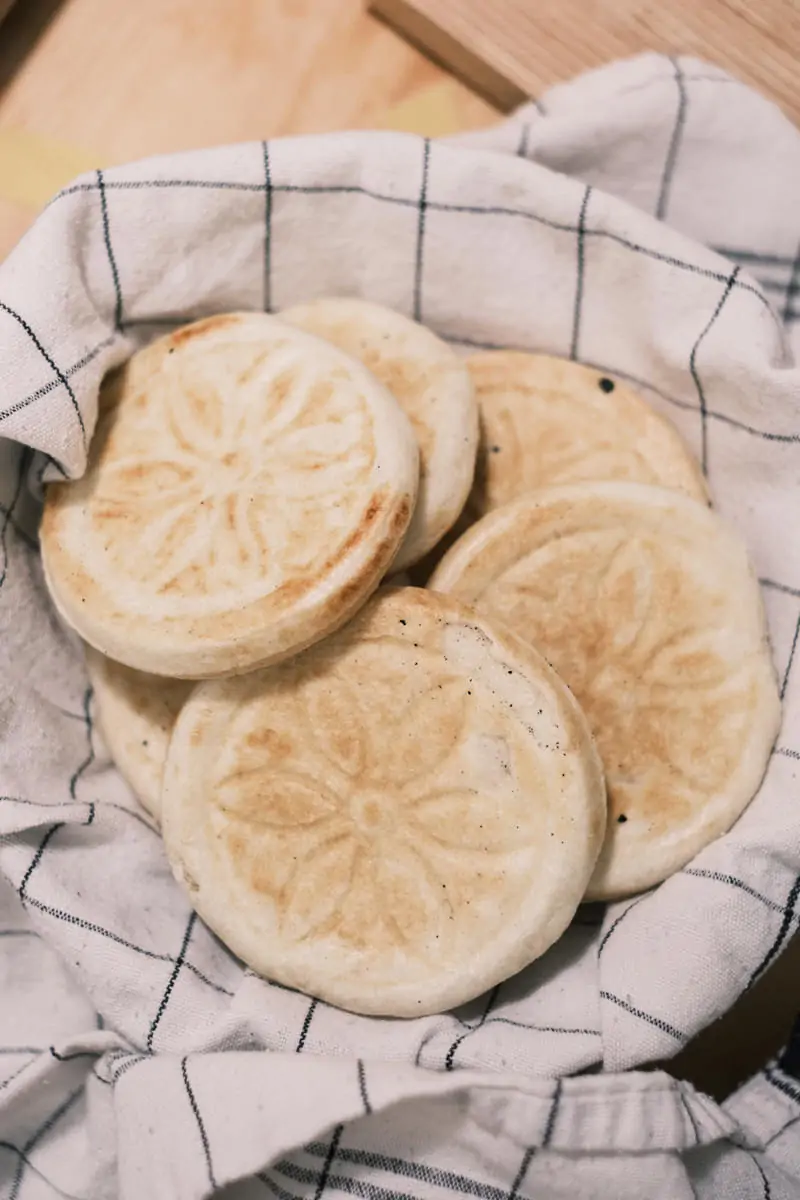
While we waited for the pasta to boil, Cristina served a traditional appetizer called tigelle (or a crescentine), a Modenese flatbread cooked in iron stovetop tigelliera, that shapes the dough into circular disks with a star-flower imprint. These were prepared earlier by her husband and timed to be warm and fresh when we were ready for it.
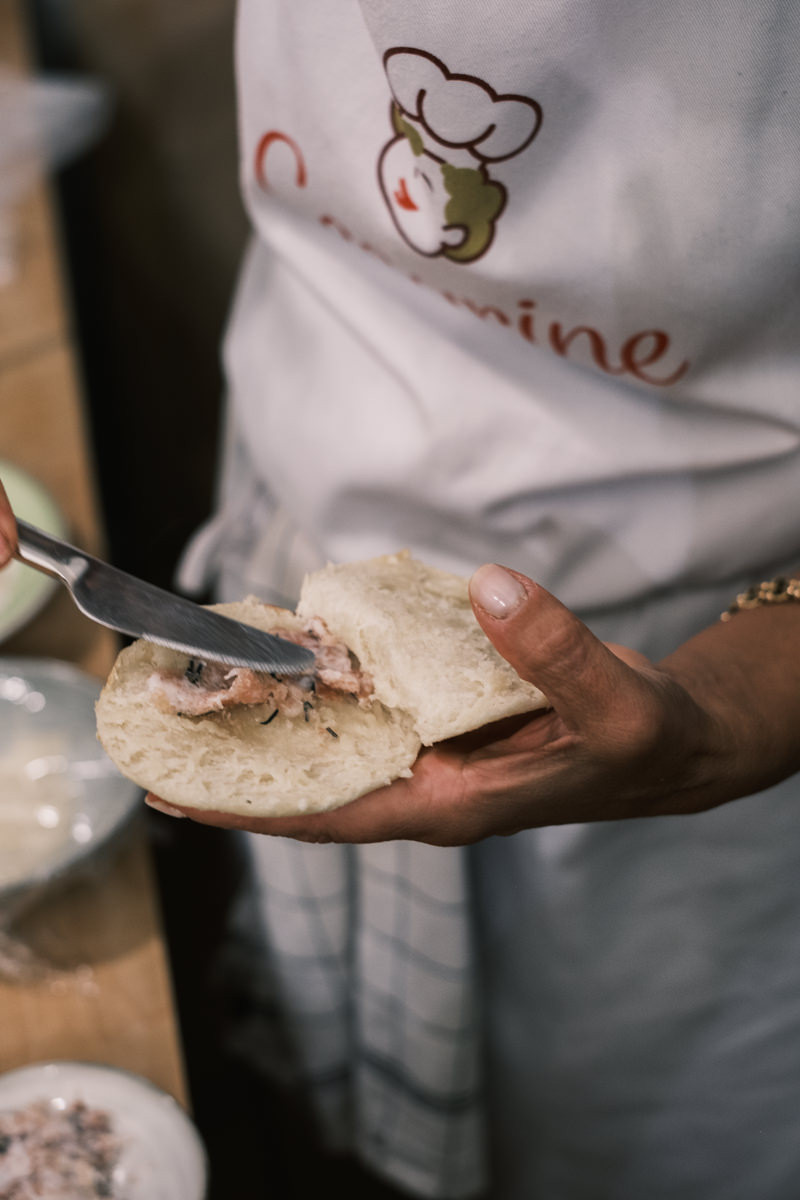
Each one is split and can be served with cured meats or a lard spread called Pesto Montanaro, that combines pork fat with fresh rosemary, garlic, and sea salt. It simply melts in between the tigelle and I could eat this combination over and over, if I weren’t trying to maintain my figure.
The ragù alla Bolognese was already prepared ahead of time by Enrico. I would have loved to have made this alongside them, but a proper ragu takes at least 2-3 hours to slow cook in order to build the flavor profile and let it all absorb into the sauce.
Cristina sends all the recipes with detailed instructions and videos so that you don’t have to take notes or remember every step during the class. I’ve definitely referred to it since I’ve returned home and replicated the dishes.
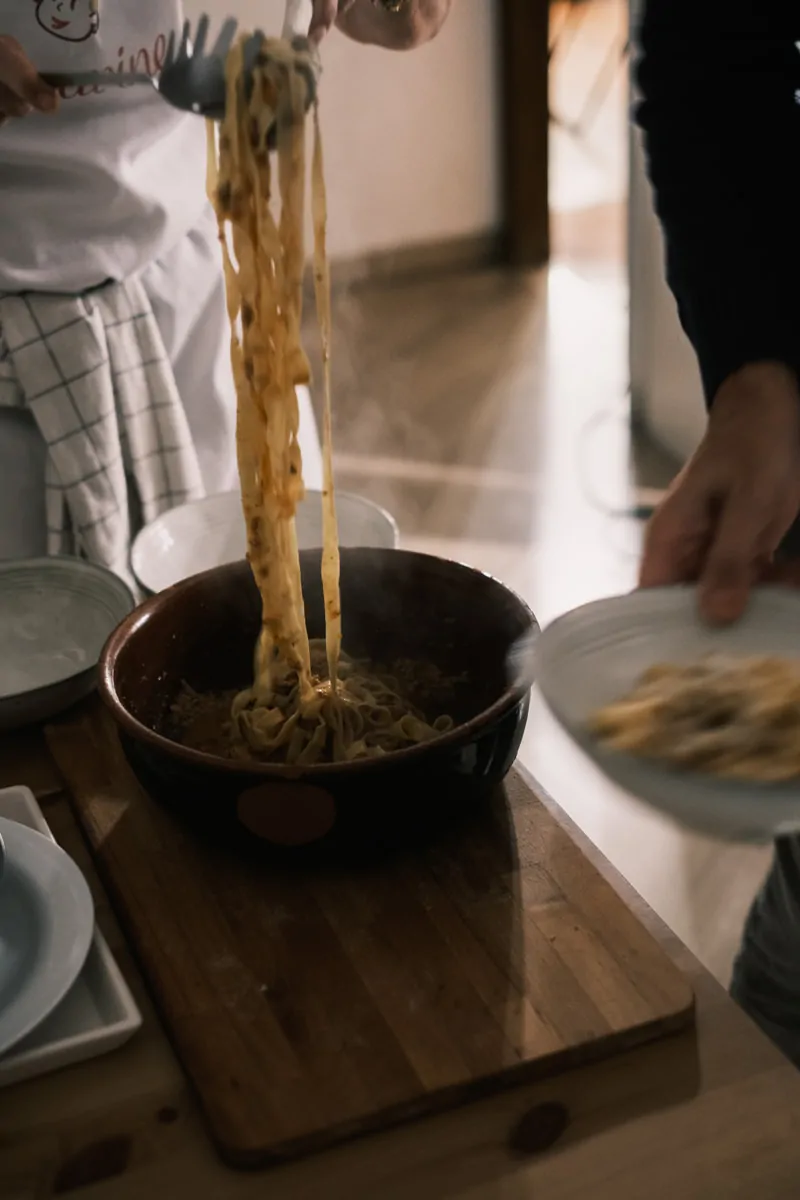
After boiling the pasta, she finishes with the dish by cooking the tagliatelle and the ragù together. The tortelloni can be served with a simple sage butter and some parmesan, but there was plenty of ragù so she prepares the cooked tortellini with the rest of it.
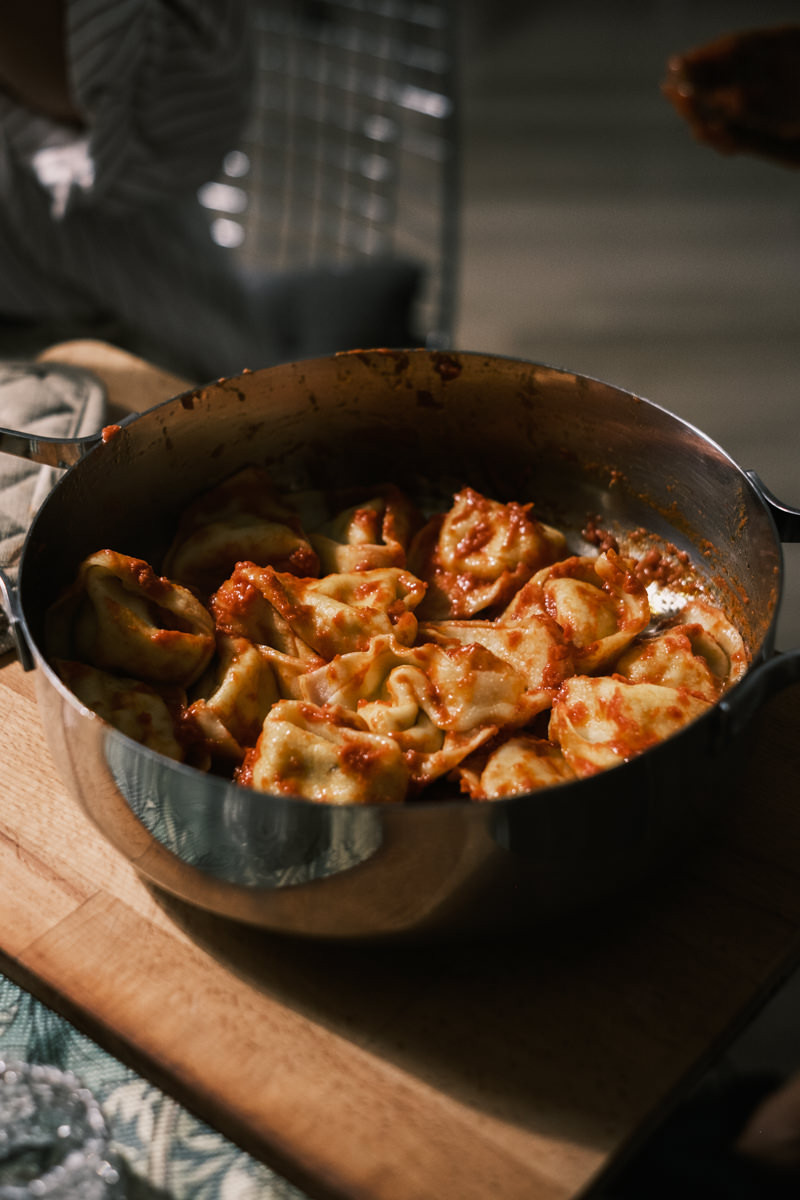
A new official recipe for Ragù alla Bolognese has been registered into the Bologna Chamber of Commerce after 41 years.
My partner and her friend had previously made their own plans that overlapped with the class, but Cristina was kind enough to invite them to join me for dinner since we had made plenty of food. Between the tigelle, the tagliatelle, tortelloni, and tiramisu, we left stuffed and a bit tipsy from all the indulgences.
We all toasted to a great meal and to Cristina and Enrico welcoming a new member to their family just the evening before. So, despite not looking like it, Cristina was now a grandmother, and I could check off ‘cooking with an Italian Nonna’ from my bucket list.
Booking Information and Final Thoughts
If you’re interested in reading more about other home cooking experiences in Italy, and in my particular the incredible one I did in Cinque Terre, check out my Cesarine Review that compares it with other cooking class options in Bologna and Cooking With Barbara In Riomaggiore.
You can book the same experience with Cristina and Enrico here or here. They also offer other experience included the one I mentioned before that included a market visit in Bologna and or a gelato churning workshop.
Overall, you’re not just getting a cooking class, but a chance to visit a real home and spend time with knowledgeable locals. It’s a rare opportunity to experience real Italian hospitality unless you already know Italians who will invite you into their homes for dinner. If that’s the case, invite me too next time.
Cesarine classes generally range from around $100 – $160. There are lower priced options for classes in Bologna, but in this range, it’s an incredible bargain for what you get and experience. It’s part of a short list of gems and recommendations I send to all my friends who are visiting Italy. And I’ve already started making plans for my next trip just to do a few more of these experiences.
Updated on August 19, 2026